Why Do Oil Rigs Have a Flame on Top? – Gas Flaring Explained
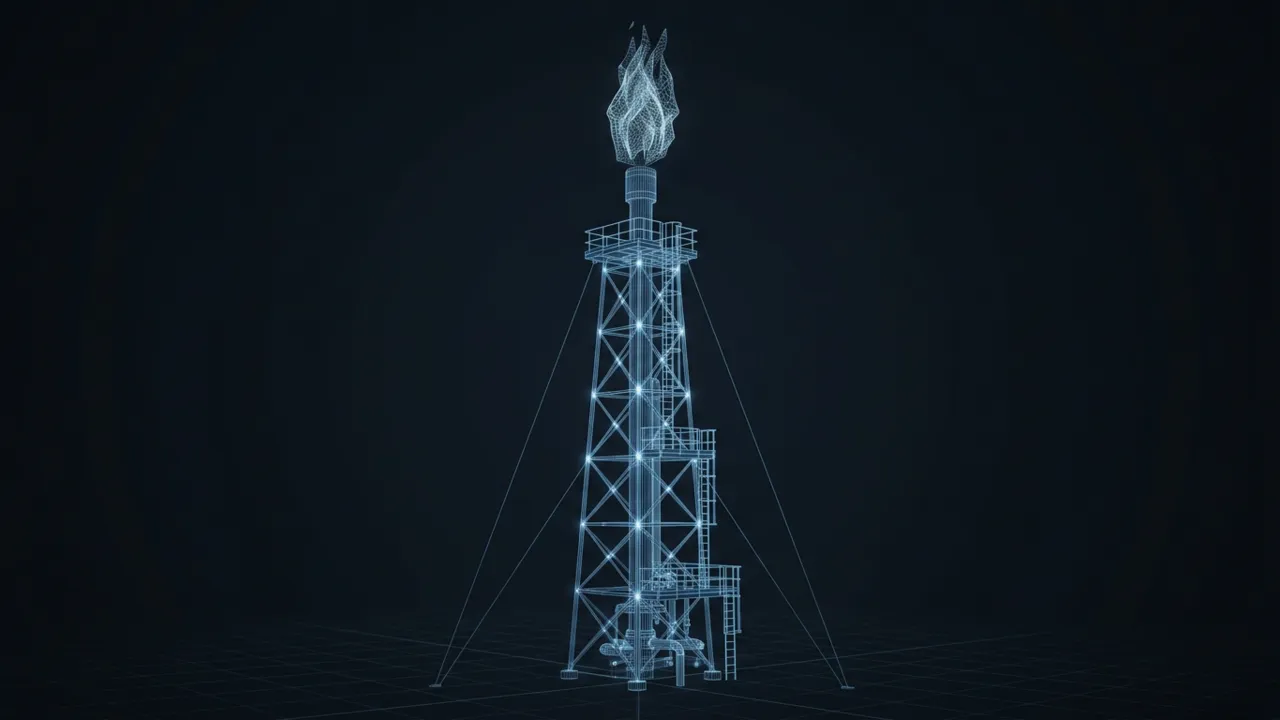
Drive through an oilfield at night and you will see them: tall pipes with a flame dancing at the top, sometimes several across the horizon. Offshore, platforms have a long boom sticking out over the water with fire at the end. It looks wasteful, and sometimes it is. But it is usually there for a reason. So, why do oil rigs have a flame on top?
Oil rigs and production sites have a flame on top because they are burning off natural gas in a flare, either for safety or because there is no practical way to capture and sell that gas. Safety flares handle gas released during pressure relief, equipment upsets, well testing or emergencies, so it does not build up and explode. Economic flaring happens when a well produces gas alongside oil but there is no pipeline or processing capacity nearby. Burning the gas turns most of its methane into carbon dioxide, which is less harmful to the climate than releasing raw methane.
What Is a Gas Flare?
A gas flare is a controlled burn of unwanted gas at the end of a pipe called a flare stack. Gas flows up the stack, a pilot flame keeps it lit, and it burns at the tip. Some flares are tall stacks. Others are ground flares or enclosed combustors that hide the flame in a box.
On offshore platforms, the flare is usually on a long boom that extends away from the living quarters and process equipment. Distance is the point. Heat and flame are kept away from people and hydrocarbons.
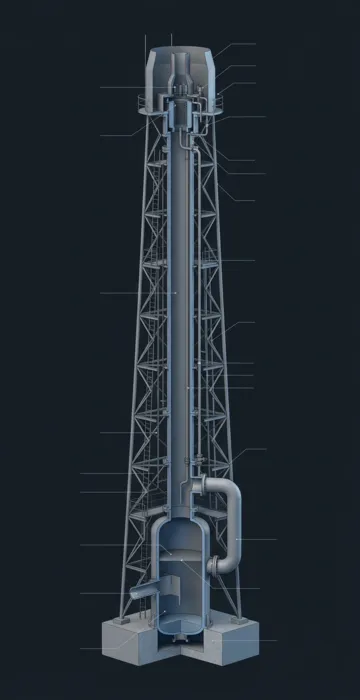
A flare system typically includes piping from the process equipment, a knockout drum that removes liquids, the stack, a pilot and an ignition system. Some flares inject steam or air to make the burn cleaner and reduce smoke.
Why Do Oil Rigs Have a Flame for Safety?
Safety is the original reason flares exist. Oil and gas facilities handle flammable fluids under pressure. When something goes wrong, they need a safe place to send gas fast.
Common safety reasons to flare include:
- Pressure relief valves opening when a vessel goes over its limit.
- Emergency shutdowns that depressurize equipment.
- Startups and shutdowns, when gas cannot go to sales yet.
- Maintenance, when equipment must be cleared of gas.
- Well testing, when a new well is flowed to measure what it can produce.
The alternative to burning that gas is releasing it unburned. A cloud of natural gas drifting across a facility is an explosion waiting for a spark. Burning it at a controlled point, away from people, is much safer.
Do Drilling Rigs Flare?
Sometimes. A drilling rig is not a production facility, so it does not flare all the time. But when gas comes up with the drilling mud, it is separated in a mud-gas separator and sent to a flare line. During well control events or well testing, the flare can be very visible. Most of the steady flames people notice are on production sites, though.
Why Do They Burn Gas at Oil Wells Instead of Selling It?
Usually because there is nowhere to send it. Many oil wells produce associated gas along with the crude. Oil can be trucked away. Gas needs a pipeline, and pipelines need processing plants and compressors.
In fast-growing oil plays, wells often come online before gathering lines reach them. Pipelines can also fill up, and gas prices can sometimes be so low that capturing it does not pay. In those cases, operators may flare the gas so they can keep producing oil, within the limits regulators allow.
Once gas is in a gathering system, operators keep it flowing and clean, which is one reason they rely on tools like pipeline pigging to keep those lines in shape.
My take: routine flaring is mostly a timing and infrastructure problem. The fix is building pipelines and processing capacity before or alongside new wells, and regulations increasingly push in that direction.
Is Flaring Better Than Venting?
For the climate, yes. Venting releases natural gas straight to the air. Natural gas is mostly methane, and methane traps far more heat than carbon dioxide over the short term. Flaring converts most of that methane to carbon dioxide and water.
That is why regulators generally prefer flaring to venting when gas cannot be captured. The best option, though, is not burning it at all. Capturing the gas and selling it, or reinjecting it, beats both.
Flares are also not perfect. If a flare burns poorly or the pilot goes out, unburned methane escapes. Flare efficiency depends on design, wind and gas makeup. The EPA's page on methane emissions from the oil and gas sector covers how operators and regulators are working to cut both venting and flaring.
What Is a Flare Stack Made Of?
A flare stack is typically a steel pipe, either self-supporting, held up by guy wires or mounted on a derrick-style frame for tall units. The tip is made of heat-resistant alloy because it lives in fire. Pilots and igniters are built to stay lit in wind and rain.
Height and placement are engineered so heat radiation at ground level stays within safe limits for people and equipment. That is why some flares are surprisingly tall.
Is Flaring Being Reduced?
In many places, yes. Governments and companies have set goals to end routine flaring, and several U.S. states have tightened flaring rules. Satellite monitoring now makes large flares easy to spot from space, which has added pressure.
Safety flaring will not go away. Every facility needs a way to handle gas in an emergency. The goal is to cut routine flaring, the kind that happens only because there is no pipeline.
Why Do Oil Rigs Have a Flame on Top?
The flame is a flare, and it burns gas that cannot safely or economically go anywhere else. Some flaring protects people and equipment. Some is simply a lack of pipelines. Burning is better than venting, but capturing the gas is better than both.
Next time you see a flame on the horizon, you will know it is not just for show. It is a safety system, and sometimes a sign that the infrastructure has not caught up with the wells.