Pipe Handling Systems – Catwalks, Racking and Pipe Movers
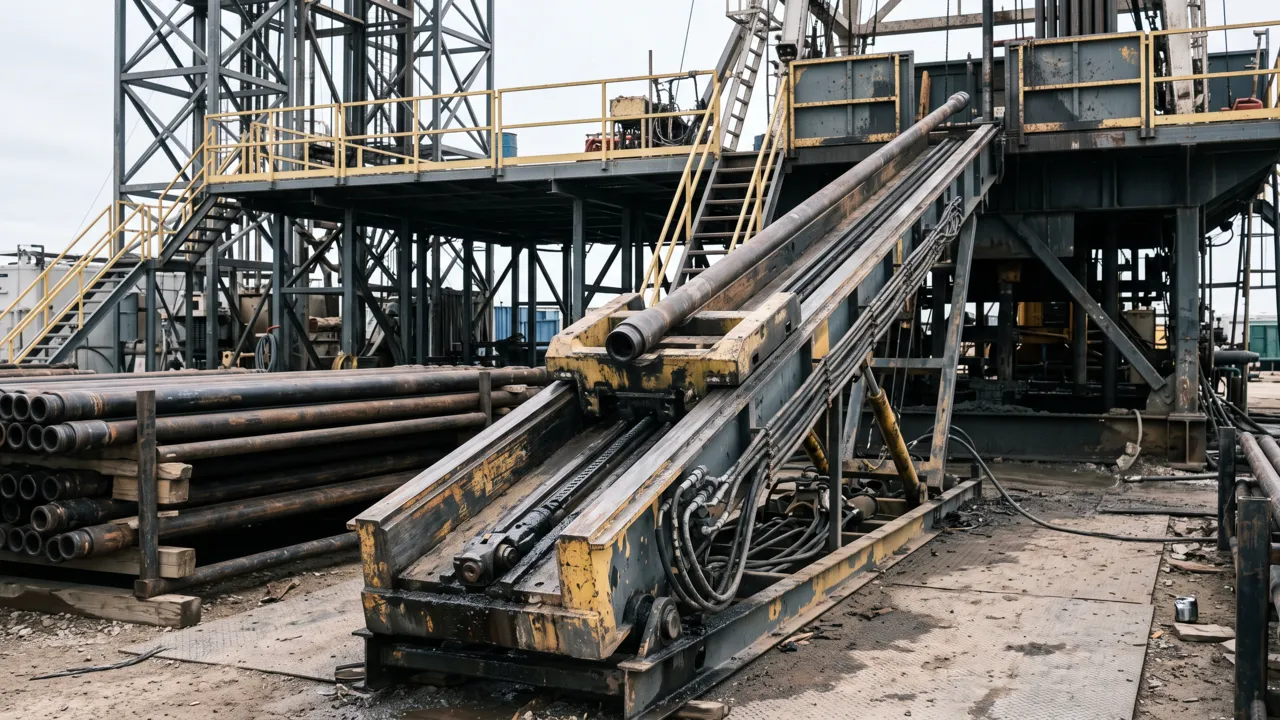
Every joint of drill pipe on a rig has to travel. It starts on the pipe racks on the ground, climbs to the rig floor, goes in the hole, comes back out and gets stood up in the derrick. For most of oilfield history, people did all that moving by hand, with ropes, hoists and a lot of muscle. Now machines do much of it. So what are pipe handling systems, and where do they actually save time?
Pipe handling systems are the machines that move tubulars between the pipe racks, the rig floor, well center and the derrick, so fewer hands have to touch moving pipe. The main pieces are a powered catwalk that lifts joints up to the floor, a racking system that stands pipe back in the derrick, and floor machines like an iron roughneck and power slips. Some rigs also build stands offline while drilling. They save time on long trips, casing runs and connections, and they take people out of the most dangerous spots. The trade-off is cost, upkeep and a learning curve.
Why Do Rigs Use Pipe Handling Systems?
Two reasons. Safety and time.
The old way of getting pipe to the floor meant dragging joints up the pipe ramp with an air hoist and catching them at the V-door. Up in the derrick, a derrickman leaned out over the board and wrestled each stand into the fingers. Plenty of hands got hurt doing both. Pinch points, swinging pipe and dropped objects were part of the work.
Machines change that. They also run at a steady pace for a whole tour, which the human back doesn't. On a well with a lot of pipe moving in and out, that steadiness adds up. I'll be honest, though. A good crew on a well-run conventional rig can still trip fast. The machines win on consistency and safety more than raw speed.
What Is a Pipe Handling Catwalk?
A pipe handling catwalk is a powered machine that replaces the old pipe ramp. It sits in front of the V-door, takes joints from the pipe racks and lifts them up to the rig floor.
Here's how it usually works:
- Indexers or kickers on the pipe racks roll one joint onto the catwalk trough.
- The trough or skate pushes the joint forward and the machine raises it up the ramp.
- The joint arrives at the floor, where the top drive elevators or a pipe handler latches on.
- Laying down runs the same steps in reverse.
Some catwalks only present the pipe at an angle. Others, often called horizontal-to-vertical machines, lift the joint all the way upright and present it to well center. Either way, nobody has to stand at the bottom of the ramp or in front of the V-door while pipe is moving. That's the biggest win in my book.
Catwalk machines handle drill pipe, collars, casing and tubing, as long as the sizes fit within the machine's range. Odd tools and heavy assemblies still often come up by crane or hoist.
How Does a Drill Pipe Racking System Work?
A drill pipe racking system moves stands between well center and the setback area. When you're tripping out, the top drive pulls a stand, the crew breaks the connection, and somebody has to move that stand over and rack it back. That job used to belong only to the derrickman and floorhands.
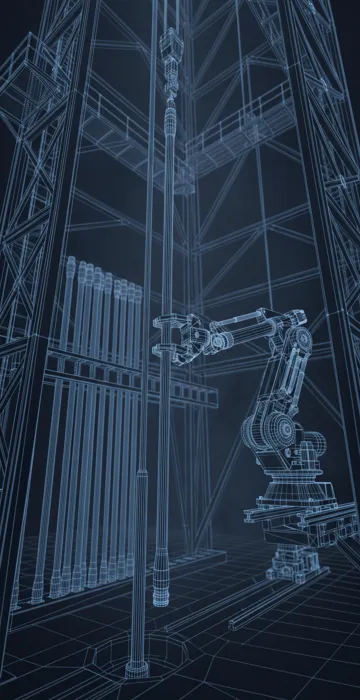
On rigs with racking systems, a machine does it. You'll see a few styles:
- Arms or rackers mounted in the derrick that grab the top of the stand and move it into the fingerboard
- Lower guide arms on the floor that steer the bottom of the stand onto the setback
- Column or bridge rackers on many offshore rigs that grip the whole stand and walk it across the floor
The racker works with the fingerboard latches, which open and close to hold each stand in place. The control system keeps track of where every stand is, so the operator knows what's racked and where.
When a rig has a full racking system, the derrickman's role changes. On some rigs, nobody goes up to the monkeyboard during a normal trip. If you want the human side of that story, read about the derrickman's job and what a hand does up on the board.
What Is Offline Stand Building?
Offline stand building means making up stands of pipe away from well center while the rig keeps drilling. Instead of adding one joint at a time during a connection, the rig picks up a ready-made stand of two or three joints.
It works like this. While the bit is turning on bottom, a pipe handler takes joints off the catwalk, sets them in a mousehole or stand-building station, and makes them up into stands. The racking system then parks the finished stands in the derrick. When it's time to add pipe, the stand is waiting.
This saves real rig time, because work that used to happen during connections moves into time when the rig is drilling anyway. That's why it shows up so often on offshore rigs with dual activity and on many high-spec land rigs. The same idea helps with casing and bottomhole assemblies too.
What Other Machines Are Part of the System?
A pipe handling system is really a team of machines. Beyond the catwalk and racker, you'll often find:
- An iron roughneck that spins and torques connections
- Power slips that set and pull without a hand lifting them
- A top drive with remote-controlled elevators and link tilt
- Automated pipe doping that coats threads before makeup
- Pipe handlers or stabbing arms that guide pipe at well center
On the most advanced rigs, all of them talk to one control system. The driller or an operator can run a whole connection or trip sequence from the cabin, with cameras and sensors showing what's happening.
Where Do Pipe Handling Systems Save the Most Time?
They save the most when there's a lot of pipe moving and the work repeats. Long trips, big casing runs and wells with many connections are where machines pay back.
They help less on short or unusual jobs. If you're constantly changing pipe sizes, running odd tools or fishing, the machines may need to be set up differently or set aside. And when something on them breaks, the rig can lose time waiting on a repair or switching back to manual work.
For rig managers comparing options, a few honest questions help:
- How much tripping and casing work does the rig really do?
- Does the crew have the training to run and troubleshoot the system?
- Is there mechanic and electrician support to keep it running?
- Can the rig fall back to manual handling if it goes down?
Pipe Handling Systems: Moving Pipe Without Moving People
Pipe handling systems move tubulars from the racks to the floor, into the hole and into the derrick with machines instead of muscle. The catwalk lifts pipe to the floor, the racker stands it back, the iron roughneck and power slips handle connections, and offline stand building keeps work off the critical path.
They save time where pipe moves a lot, and they keep hands out of the worst pinch points. But they cost money and need care. Pick the system that fits the work your rig really does, and keep your crew trained on the manual way too.