How Does an Oil Rig Work? – Drilling Rig Basics
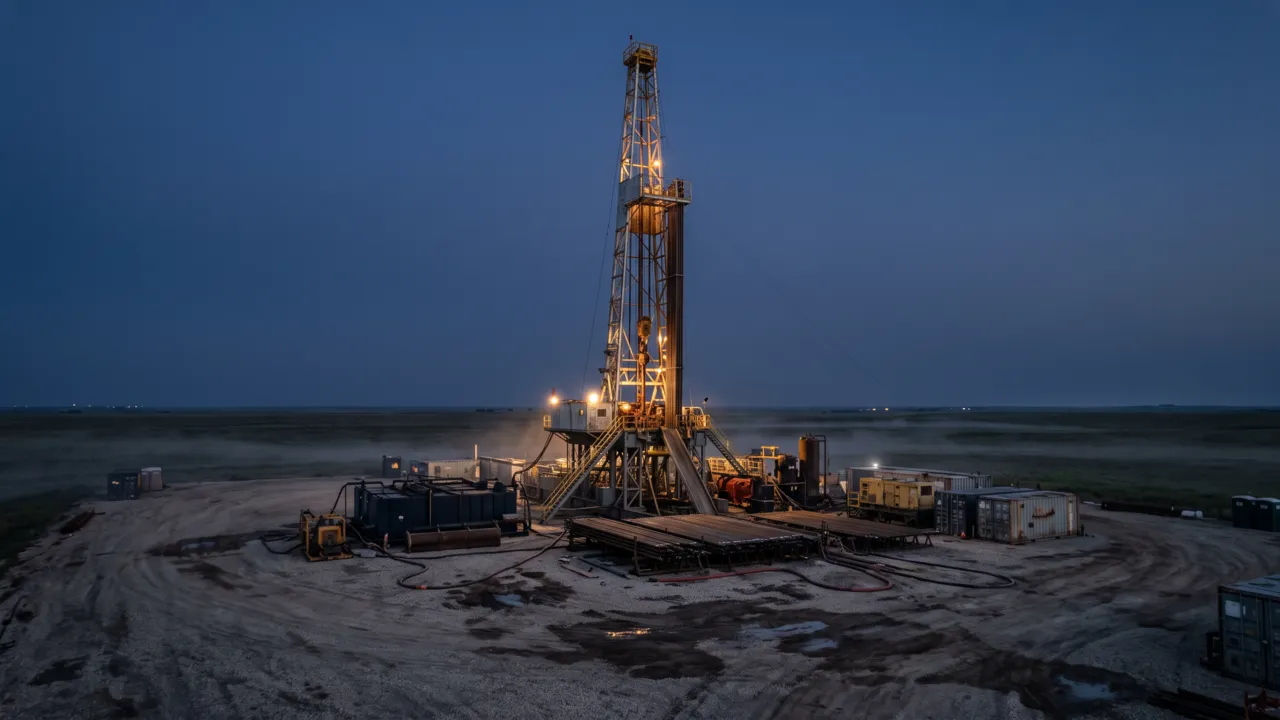
From the highway, a drilling rig looks like a steel tower with a lot of noise and trucks around it. Up close it is a dozen machines working as one, and new hands usually spend their first hitch just trying to figure out what does what. So what is all that iron actually doing? How does an oil rig work?
An oil rig works by turning a drill bit on the end of a long string of steel pipe while pumping drilling fluid down through that pipe to clean the hole and control pressure. Every rig, land or offshore, does that job with five main systems: power, hoisting, rotating, circulating and well control. It drills in sections, casing and cementing each one before going deeper with a smaller bit, until it reaches the target formation. The rig doesn't pump oil. It builds the hole that a production well uses later.
What Is a Drilling Rig, Really?
A drilling rig is a machine built to make a hole in the ground thousands of feet deep and keep that hole stable and under control while it's being made. That's it. Everything on location exists to serve that one goal.
People say "oil rig" for everything from a pumpjack to an offshore platform. I'll tell you what most people miss: the pumpjack nodding in a pasture is a production unit, not a rig. The rig shows up, drills the well, and moves on to the next one. Production equipment comes in after.
Rigs come in a lot of shapes. There are land rigs that move on trucks, jackups that stand on the seafloor, and floating rigs that drill in water a mile or more deep. If you want the full lineup, this article on drilling rig types walks through each one. But the guts are the same on all of them, and that's what we're covering here.
What Are the Main Systems of an Oil Rig?
Every drilling rig runs on five systems. Learn these and you can walk onto any rig in the world and know roughly where you're standing.
- Power system: engines and generators that make the energy for everything else.
- Hoisting system: the drawworks, drilling line and blocks that lift and lower the drill string.
- Rotating system: the top drive (or kelly and rotary table) that turns the pipe and bit.
- Circulating system: mud pumps, mud tanks and solids control equipment that move drilling fluid down the hole and back.
- Well control system: the blowout preventer stack and its controls, which seal the well if pressure gets out of hand.
Some hands count a sixth system for the structure itself (the mast and substructure), and offshore folks add station-keeping. That's fine. The five above are the ones that make hole.
How Does the Power System Run the Rig?
The power system is usually a bank of big diesel engines driving electric generators. That electricity runs the drawworks, the mud pumps, the top drive and the rest of the rig. A lot of newer rigs also burn natural gas, run dual fuel, or plug into the utility grid when a line is close enough.
Older mechanical rigs sent engine power straight to the equipment through chains, clutches and a compound. Most modern rigs are electric. The generators feed a control house, often called the SCR or VFD house, which sends regulated power to each motor. That lets the driller run the pumps, the hoist and the top drive independently from one console.
When the engines go down, everything goes down. That's why motormen and electricians earn their keep. A rig can't trip pipe, can't circulate, and can't drill without steady power.
How Does the Hoisting System Lift Thousands of Feet of Pipe?
The hoisting system is a giant block and tackle. Its job is to pick up the drill string, hold it steady while drilling, and run it in and out of the hole.
Here's how the pieces fit:
- The drawworks is a big powered drum on the rig floor that reels the drilling line in and out.
- The drilling line is thick wire rope that runs from the drawworks up to the top of the mast.
- The crown block is a set of fixed sheaves (pulleys) at the top of the mast.
- The traveling block hangs below the crown and moves up and down as the line is reeled in or out.
- The deadline anchor clamps the far end of the line to the substructure so it can't move.
The line gets strung back and forth between the crown and the traveling block several times. Each extra line multiplies the lifting force, which is how a drawworks can hold up a drill string that weighs hundreds of thousands of pounds. The driller controls all of it with a brake and a throttle, and on newer rigs, with a joystick and a screen.
Honestly, the hoisting system is where you need to keep your head up. Heavy loads move overhead all day. Stay out from under them.
How Does a Rig Turn the Drill Bit?
The rotating system turns the entire drill string from the surface, and the string turns the bit at the bottom. On most modern rigs that job belongs to the top drive, a big motor that hangs from the traveling block and screws directly into the top of the pipe.
Older rigs used a kelly, a square or six-sided pipe that slid through a kelly bushing in the rotary table on the floor. The rotary table spun, the bushing spun the kelly, and the kelly spun the pipe. Plenty of smaller rigs still run that setup.
Under the top drive or kelly, the drill string goes like this, top to bottom:
- Drill pipe, in joints roughly 30 feet long, screwed together at thick threaded tool joints.
- Heavyweight drill pipe as a transition.
- Drill collars, heavy thick-walled pipe that puts weight on the bit.
- Downhole tools such as stabilizers, MWD tools, and often a mud motor.
- The bit itself.
That bottom section is called the bottomhole assembly, or BHA. A mud motor in the BHA can spin the bit using mud flow alone, which is how directional drillers steer a well without turning the whole string.
How Do Drilling Rigs Drill Through Rock?
The bit does the cutting. The driller sets weight on it by slacking off some of the string's weight onto the bottom of the hole, and then the rotation does the rest. A PDC bit shears rock like a plane shaving wood. A roller cone bit crushes and chips it. Rigzone has a good plain-language rundown on how a drill bit works if you want the details.
The driller watches a handful of numbers all tour: weight on bit, rotary speed, torque, pump pressure and rate of penetration. When those numbers change, something downhole changed. A good driller can tell a lot from a torque gauge.
Every time the top of the pipe gets down near the floor, the crew stops and adds more pipe. That's called making a connection. With a top drive you can drill a full stand (usually three joints, about 90 feet) before stopping, which saves a lot of time over the kelly days of one joint at a time.
Why Does a Rig Pump Mud Down the Hole?
Drilling mud does more jobs than any other part of the operation. It carries rock cuttings up out of the hole, cools and lubricates the bit, holds the hole walls up, and its weight holds back the pressure of fluids in the rock. Without it, you aren't drilling, you're just digging a hole that's about to cave or blow out.
The circulating system is one big loop:
- Mud pumps pull mud from the tanks and push it at high pressure up the standpipe.
- The mud goes through the rotary hose, into the top drive, and down the inside of the drill pipe.
- It shoots out of nozzles in the bit and sweeps the cuttings away.
- It travels back up the annulus, the space between the pipe and the hole wall.
- At the surface it flows out the flowline and across the shale shakers, which screen out the cuttings.
- Desanders, desilters, centrifuges and a degasser clean it further, and it goes back into the tanks.
The mud engineer and derrickman keep an eye on its weight and properties every tour. If the mud is wrong, the whole well can go wrong.
How Does the Rig Keep the Well Under Control?
The first line of defense is the mud weight. As long as the mud column in the hole presses down harder than the fluids in the rock push up, the well stays quiet. When formation pressure beats the mud, oil, gas or salt water flows into the hole. That's a kick.
The second line of defense is the blowout preventer stack, or BOP. It sits on top of the wellhead under the rig floor and contains several sealing devices:
- Annular preventer: a big rubber element that squeezes shut around almost anything in the hole.
- Pipe rams: steel blocks that close around the drill pipe.
- Blind or shear rams: rams that seal an open hole or cut through the pipe in an emergency.
A hydraulic accumulator unit keeps stored pressure ready to close the BOP fast, even with the power off. Once the well is shut in, the crew circulates the kick out through the choke manifold and pumps in heavier mud.
Every hand on the floor learns to watch for kick signs, like the pits gaining mud or the well flowing with the pumps off. If something looks off, you tell the driller right then. Nobody on a good crew will ever get on you for calling a flow check.
What Happens From Spud to Total Depth?
Drilling a well isn't one long run straight down. It's done in sections, and each section ends with steel casing cemented in place. Here's the general sequence on a typical land well:
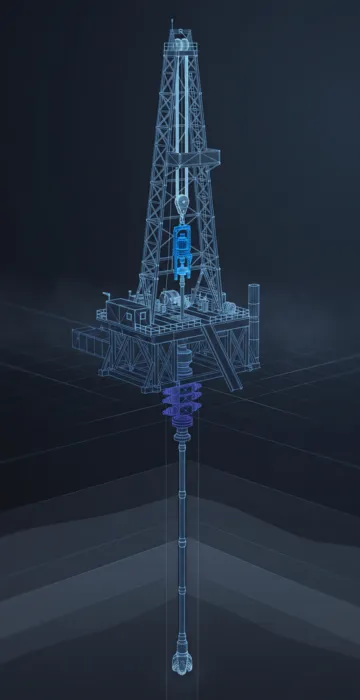
- Spud in: the rig starts drilling the surface hole with a large bit.
- Run surface casing: big pipe goes in to protect shallow freshwater zones, then it's cemented.
- Nipple up the BOP: the blowout preventer goes on the wellhead and gets pressure tested.
- Drill the next section: a smaller bit goes through the casing and drills deeper.
- Run and cement more casing: intermediate strings as needed for problem zones.
- Drill to total depth (TD): the final hole section reaches the target.
- Log, run production casing and cement: then the rig rigs down and moves.
Along the way the crew trips pipe whenever the bit wears out or the BHA needs changing. Tripping out means pulling the whole string, standing it back in the derrick, and running it back in. On a deep well, a round trip can eat most of a day.
After the rig leaves, a completion crew comes in to perforate the casing, frac the well if it's a shale play, and set up the production equipment. That's a whole different crew and a whole different set of iron.
Who Runs a Drilling Rig?
A land rig crew on tour is usually small. The core team looks something like this:
- Toolpusher (rig manager): runs the rig and the crews.
- Driller: runs the controls and is in charge of the floor during the tour.
- Derrickman: works up in the derrick during trips and minds the mud pumps and mud tanks.
- Floorhands (roughnecks): make connections, handle pipe and do most of the physical work.
- Motorman: keeps engines and equipment running on many rigs.
On top of that, the operator sends a company man to represent the oil company, plus service hands like mud engineers, directional drillers, MWD hands and mud loggers. Offshore crews are much bigger, with cranes, marine crews and catering on board.
Safety ties all of them together. OSHA's illustrated glossary of rig components is a good place to see labeled pictures of the equipment and the hazards around it.
Is an Offshore Rig Different From a Land Rig?
Offshore rigs use the same five systems, just bigger and with a few extras. A jackup stands on legs on the seafloor in shallow water. Semisubmersibles and drillships float, so they need anchors or dynamic positioning thrusters to stay over the well.
Floating rigs also run a marine riser, a large pipe that connects the rig to a BOP sitting on the seafloor. Mud comes back up the riser instead of straight out of a hole under the floor. They also need heave compensation, because the rig moves with the waves while the drill string needs to stay steady on bottom.
The basics never change, though. Power, hoist, rotate, circulate and keep control. Whether the rig sits in a cotton field or in 8,000 feet of water, that's the job.
So, How Does an Oil Rig Work When You Put It All Together?
Put simply, an oil rig works by rotating a bit on a long string of pipe while pumping mud through it, and it does that with five systems working in sync. Power feeds the machines. The hoist carries the weight. The rotating system turns the bit. The mud cleans and protects the hole. The BOP stands guard in case the well tries to kick.
If you're new to the rig, learn those five systems first and the rest will start to make sense fast. Then learn the floor, the pipe handling tools and the kick signs. That's what keeps you useful and keeps you safe.
And the next time you drive past a rig at night with all its lights on, you'll know it isn't pumping oil. It's making hole, one connection at a time.