How Is an Oil Rig Built? – Substructure, Mast and Floor
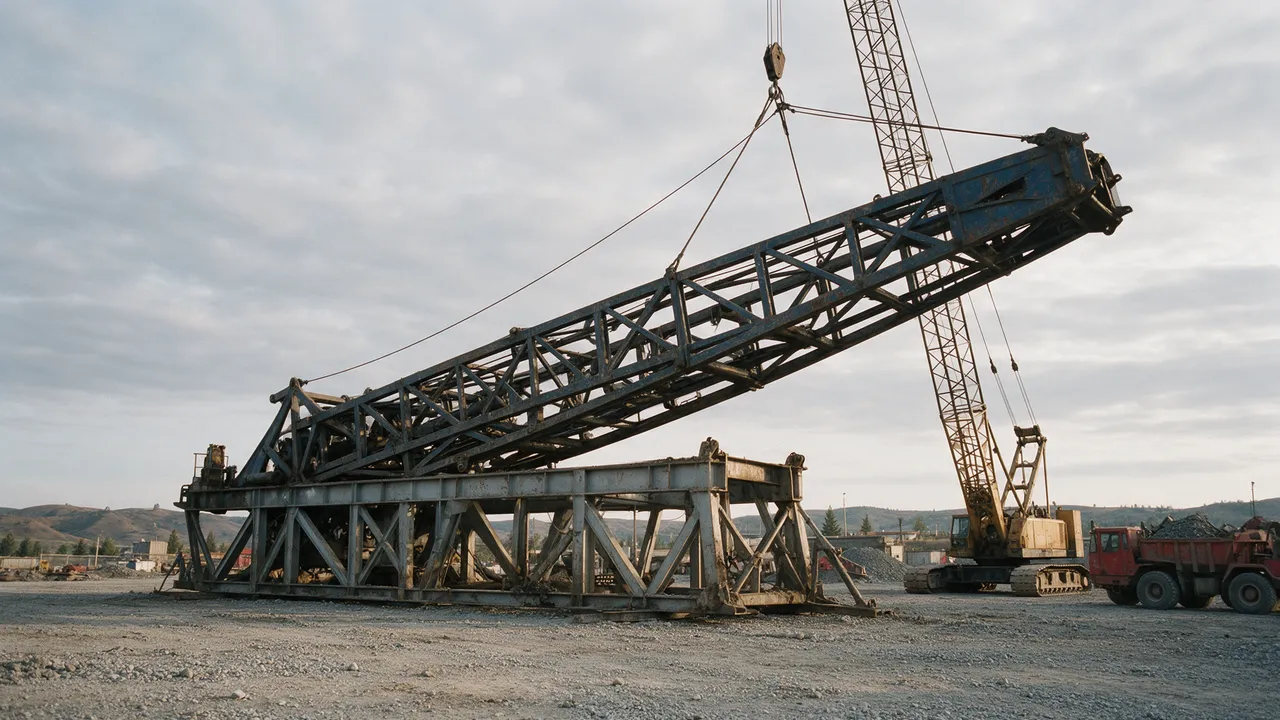
A drilling rig looks like it grew out of the ground. One week there's a bare patch of caliche, and the next there's a steel tower taller than most office buildings with lights on it all night. People ask me how a crew pulls that off without a construction crane the size of a skyscraper. Fair question. How is an oil rig built?
A land oil rig is built from the ground up in a set order: the pad and cellar first, then the substructure, then the rig floor equipment, and finally the mast, which is pinned together lying down and raised into the air as one piece. The rig itself is not built from scratch on each location. It was manufactured in a shop as a set of modules, and the crew assembles those modules like heavy, oily building blocks. The drawworks and the traveling block, which the rig already carries, do most of the lifting when the mast goes up. Offshore rigs are a different animal, built in shipyards.
How Is an Oil Rig Built on Location, Step by Step?
Here's the order most land rigs go up in. Every rig design has its own quirks, and the rig manager's procedure is the one you follow, but the bones of it look like this:
- Build the pad. Dirt contractors level the location, lay down rock or caliche and dig the cellar, a lined pit around the well center.
- Set the conductor. A short, large-diameter pipe is usually driven or drilled in ahead of the rig to give the well a stable top.
- Lay the rig mats. Heavy mats spread the load so the rig doesn't sink when the ground gets wet.
- Set the substructure. The base boxes go down, centered over the hole and leveled.
- Set the rig floor equipment. The drawworks, rotary table, doghouse and floor sections go on.
- Pin the mast. The mast sections are laid out on stands, pinned together and hooked to the floor at the mast shoes.
- Raise the mast. The drawworks reels in raising lines and the mast swings up and locks in place.
- Rig up everything else. Mud pumps, tanks, solids control, generators, the BOP equipment, walkways and stairs all get hooked up.
That last step is where the real hours go. Raising the mast is the dramatic part, but plumbing and wiring a rig takes more time than standing it up.
What Does a Drilling Rig Substructure Do?
The drilling rig substructure is the steel frame the whole rig sits on. It holds up the rig floor, the mast, the drawworks and all the pipe standing in the derrick. It also lifts the floor high enough off the ground to fit the blowout preventer stack underneath.
That second job is the one new hands overlook. The BOP stack bolts onto the wellhead below the floor, and on a deep, high-pressure well that stack is tall. The substructure has to give it room, with some to spare for a crew to work on it.
A substructure is rated two ways that matter:
- Rotary capacity, the weight it can carry hanging in the rotary table or slips.
- Setback capacity, the weight of drill pipe and collars it can hold standing back in the derrick.
You add those together and that's roughly the load the base has to carry on a bad day. That's why the mats and the leveling matter so much. A substructure that settles out of level puts the whole rig out of line with the hole.
Box-on-Box and Self-Elevating Substructures
Older and smaller rigs often use box-on-box substructures. Steel boxes get stacked to the height you need, and the floor sits on top.
Many bigger rigs use a self-elevating design, often called a slingshot. The floor and mast are rigged up close to the ground, where it's safer and easier to work, and then the whole floor gets raised to full height using the rig's own hoisting gear. I'll take that over building everything up high any day.
How Does the Rig Floor Get Put Together?
The rig floor is the working deck where the crew makes connections, trips pipe and runs the show. Once the substructure is set, the floor pieces and the big iron go on.
The heart of it is the hoisting machine. The drawworks hoisting system sits on or beside the floor and spools the drilling line that lifts everything in the derrick. On many rigs the drawworks is set early because it's the motor that raises the mast.
Next come the rotary table (or just a set of slips on a top drive rig), the driller's cabin or console, the doghouse, the iron roughneck if the rig has one, the catwalk and the V-door ramp where pipe comes up to the floor. Handrails, stairs and escape routes go on before anybody works up there for real.
Derrick vs Mast: What's the Difference?
A derrick is a tower built piece by piece and left standing. A mast is a portable tower that's assembled lying down and raised as a unit. People use the words interchangeably, and on most land rigs today the thing you see is really a mast.
| Derrick | Mast | |
|---|---|---|
| How it goes up | Bolted together member by member, standing | Pinned together lying down, then raised in one piece |
| Portability | Meant to stay put | Built to come down and move |
| Where you see it | Offshore platforms, old land wells | Most land rigs |
| Shape | Four-legged lattice tower | Often an A-frame or open-front cantilever |
The old wooden derricks in the oil boom photos were real derricks. Crews built them on site and often left them over the well when they moved on. If you want the textbook definition, the SLB glossary entry for the drilling mast lays it out plainly.
Honestly, the mast won for land work because of money and time. You can't afford to build a tower from scratch on every location when the rig moves every few weeks.
How Is the Mast Raised?
The mast is raised by the rig's own hoisting system. It's laid out horizontally on a stand, with the bottom pinned to the rig floor at the mast shoes. Raising lines run from the mast through sheaves to the traveling block, and the drawworks slowly reels them in.
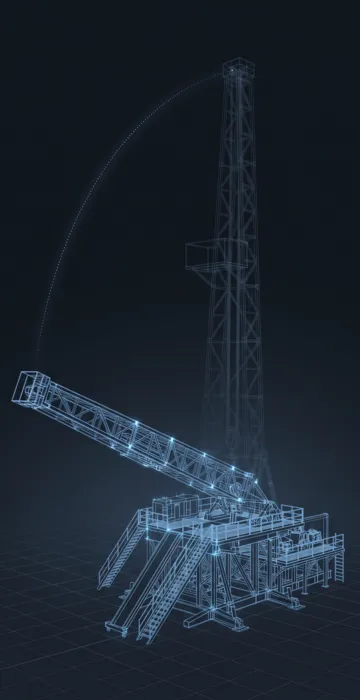
As the line comes in, the mast pivots on its shoes and swings up. Near vertical, it settles onto its supports and gets pinned or locked off. On some rigs the mast is raised with hydraulic cylinders instead of line.
I'll tell you straight: raising or lowering the mast is one of the highest-risk jobs a rig crew does. Every pin, every line and every brake gets inspected first. Everybody not needed stays well clear. The driller watches the weight indicator like a hawk, and if something doesn't look right, the lift stops. OSHA's eTool on rigging up a drilling rig covers the main hazards, and it's worth a new hand's time.
How Tall Is a Drilling Rig Derrick?
Most land rig masts stand somewhere around 100 to 150 feet tall, and big offshore derricks often run taller. The real answer depends on what the rig was built to do.
Height is mostly about how much pipe you can pull at once. When you trip, you pull the drill string in stands, usually two or three joints screwed together. A rig that pulls triples, around 90 feet of pipe per stand, needs a taller mast than one that pulls doubles. The derrickman works on a platform up near the top of the stand to rack it back.
Taller isn't always better. A taller mast is heavier, catches more wind and takes more trucks to move. Rig owners pick a height that fits the wells they expect to drill.
Are Offshore Rigs Built the Same Way?
No. Offshore drilling units are built in shipyards, not on location. A jack-up, semisubmersible or drillship is a vessel first, and its hull, legs or pontoons get fabricated in a yard over many months. The drilling package (derrick, drawworks, pumps and the rest) is installed in the yard too, then the whole unit goes out to sea.
Fixed platforms are a mix. The jacket or base is built onshore, towed or barged out and set on the seafloor. The deck modules, including a modular drilling rig, get lifted on by a crane vessel. On those platforms you'll usually see a true derrick, because it's not going anywhere soon.
How Long Does It Take to Build an Oil Rig?
Rigging up a land rig on a new location usually takes a few days, sometimes more for a big rig after a long move. Building a brand-new rig in a manufacturing shop takes many months, and a new offshore unit can take years from contract to first well.
A good crew can shave a lot of time off a rig up, but not by rushing. They do it by planning. Loads arrive in the right order, everybody knows their job, and nothing has to be moved twice. A rig that goes up slow and careful drills a lot better than one that goes up fast and crooked.
So, How Is an Oil Rig Built? One Heavy Piece at a Time
A land oil rig is built in order: pad and cellar, mats, substructure, floor equipment, then the mast pinned on the ground and raised by the rig's own drawworks. After that comes the long job of hooking up pumps, tanks, power and well control equipment.
The pieces were all built in a shop, and the crew's job is to put them together level, plumb and safe. Offshore units skip that and come out of a shipyard ready to work.
If you're new to the rig floor, learn the build order and you'll understand the rig. Every piece sits where it does for a reason, and most of those reasons come down to weight, height and keeping people out of harm's way.