What Is the Rig Count? – Why the Industry Watches It

Every Friday around midday, a lot of people in oil country check the same number. Rig hands check it, and so do their spouses, the diner owner in town, the guy who rents out RV spaces and the bankers in Houston. When it goes up, there's a little relief in the air. When it falls for weeks in a row, people get quiet. So what is the rig count, and why does the whole industry watch it so closely?
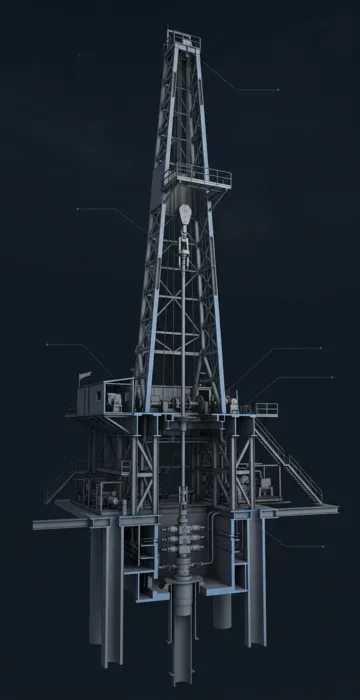
The rig count is a weekly tally of how many drilling rigs are actively drilling for oil and natural gas. The best-known version is the Baker Hughes rig count, which the company has published for the United States since the 1940s and now also tracks for Canada and other countries. It counts rigs that are on location and making hole, not rigs stacked in a yard or rigs doing workover jobs. Because drilling is how future production starts, the number works like a pulse check on the upstream oil and gas business. It mostly follows oil and gas prices, usually a few months behind them.
How Does the Baker Hughes Rig Count Work?
The Baker Hughes rig count works by counting rigs that are actively drilling during the week, then publishing the total every Friday. Its people gather the data from field contacts and other sources across each region. A rig gets counted when it's on a well and drilling, sometimes called "turning to the right."
The weekly report breaks the number down in useful ways:
- Oil rigs versus gas rigs, based on what the well is mainly targeting
- Land, inland water and offshore rigs
- Horizontal, directional and vertical wells
- Counts by state and by major basin, like the Permian or the Haynesville
You can see the current numbers and the history on the Baker Hughes rig count page. Other firms publish their own counts too, and the numbers don't always match exactly. The Baker Hughes count is the one the news usually quotes.
What Doesn't the Rig Count Include?
The rig count leaves out a lot of activity people assume it covers. It doesn't count workover or well servicing rigs. It doesn't count frac crews, which are tracked separately by other firms. And it doesn't count rigs that are idle, even if a crew is still on payroll waiting for the next well.
That matters. In shale country, much of the money and many of the jobs sit in completions, not just drilling. A steady rig count can hide a big swing in frac activity, and the reverse is true too.
Why Does the Industry Watch the Rig Count So Closely?
The industry watches the rig count because it's one of the few fast, public signals of how much companies are really investing in new wells. Budgets and forecasts can be talked up or down. A rig either drills or it doesn't.
Different people read it for different reasons:
- Traders and analysts use it as a hint about future oil and gas supply.
- Drilling contractors watch rig demand and the rates they can charge.
- Companies in oilfield services, from mud and cementing to trucking and rentals, use it to plan crews and inventory.
- Towns in oil country read it as a forecast for jobs, hotel rooms and sales tax.
- Rig hands read it to guess whether their next hitch is safe.
That last one is the part I never forget. Behind every rig that drops off the count is a crew that may be going home without a next job lined up. The count is a number, but it lands on real kitchen tables.
How Does the Rig Count Relate to Oil Prices?
The rig count usually follows oil and gas prices, but with a delay of a few months. When prices rise and stay up, companies raise budgets, contract rigs and start drilling. When prices fall, they finish the wells they've started and then release rigs.
That lag happens because drilling is planned well ahead. Rigs are under contract, leases have deadlines and wells are permitted months in advance. Companies also wait to see if a price move will last before they change course.
Prices themselves are driven by global supply and demand, OPEC decisions, the economy and world events. The EIA's page on what drives crude oil prices lays out those forces in plain language. Gas rigs follow natural gas prices, which have their own ups and downs tied to weather, storage and exports.
Does a Lower Rig Count Mean Less Oil?
Not always, at least not right away. Today's rigs drill much faster than older ones, and shale wells reach far longer laterals. So fewer rigs can keep production flat or even growing for a while.
That's why U.S. oil production climbed to record levels in recent years even while the rig count stayed far below its old peaks. In the early 1980s boom, the U.S. count topped 4,500 rigs. Modern counts are a fraction of that, yet each rig does far more work.
How Do Politics and Policy Affect the Rig Count?
Politics affects the rig count mostly through rules, permits and the cost of doing business, though price still matters most. Policies can make drilling easier or harder in certain places, which shifts where rigs go.
Here are some of the ways policy shows up in the count:
- Federal leasing and permits for public lands and offshore waters
- State rules on spacing, flaring and wastewater disposal
- Pipeline approvals that decide whether gas can reach a market
- Tariffs on steel and equipment that raise well costs
- Trade, sanctions and OPEC agreements that move world prices
- Methane and emissions rules that add costs or require new equipment
People from all sides like to point at the rig count after an election. In my experience, it's rarely that simple. A policy change might shift some activity from federal land to private land, while a price crash can wipe out more rigs in one quarter than any law. When you hear someone pin the count on one politician, take it with a grain of salt.
What Does a Rising or Falling Rig Count Feel Like on the Ground?
A rising rig count feels like trucks on every road and "now hiring" signs on every service yard. Motels fill up, restaurants get busy and rent climbs. Young hands find work fast and overtime is everywhere.
A falling count feels different. Layoffs come in waves, rigs get stacked in yards along the highway, and families tighten up. The count can drop sharply when prices crash, as it did in 2015 and again in 2020, when it sank to the lowest levels in its long history.
Anybody who has lived through a few cycles learns to read the Friday number with mixed feelings. It's good news for some, a warning for others, and a reminder that this business always moves in waves.
What Is the Rig Count Really Telling You?
The rig count tells you how many rigs are drilling right now, and that's a decent clue about where oil and gas activity is heading. It mostly tracks prices with a lag, and it's shaped at the edges by policy, technology and company plans.
It doesn't tell you everything. Watch it alongside oil and gas prices, production data and frac activity for a fuller picture. And if you work in the patch, remember that a dip doesn't always mean disaster. The cycle turns, and good hands are always needed when it does.