Rotary Steerable vs. Mud Motor – Which Steers Better?
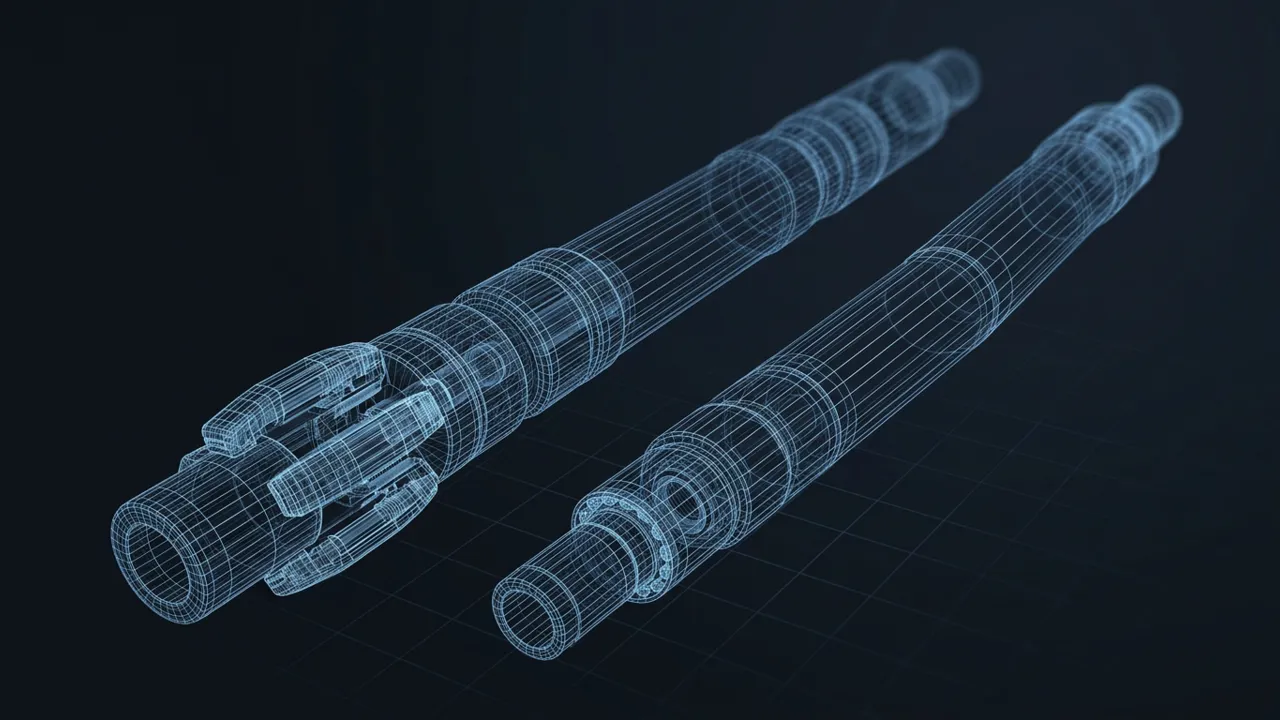
Steering a drill bit two miles underground sounds like science fiction, but directional drillers do it every day. They have two main tools for the job. One is the trusty bent-housing mud motor, which has been steering wells for decades. The other is the newer rotary steerable system, which promises smoother holes and faster drilling at a higher price. Operators argue about which to use on almost every well plan. So which steers better, a rotary steerable system or a mud motor?
A rotary steerable system (RSS) generally steers better than a mud motor because it can change direction while the whole drill string keeps rotating, which gives a smoother wellbore, better hole cleaning and more consistent progress. A bent-housing mud motor steers by "sliding," where the string stops rotating and the bit is pushed forward along a fixed direction, and that sliding is slower and leaves a more crooked hole. The advantage grows with well length. But mud motors are much cheaper, simpler and still the right choice for many shorter or simpler wells. The right pick depends on the well and the budget.
How Does a Mud Motor Steer?
A mud motor is a positive displacement motor that sits just above the bit. Drilling fluid pumped through it turns a spiral rotor inside a rubber-lined stator, and that rotor turns the bit. For steering, the motor has a small bend in its housing, usually between a fraction of a degree and about three degrees.
That bend lets the motor drill in two modes:
- Sliding: the drill string doesn't rotate from the surface. The bend points in one direction (the "toolface"), and the motor turns the bit, so the hole curves that way.
- Rotating: the whole string rotates from the surface. The bend spins around, its steering effect averages out, and the hole goes roughly straight.
The directional driller mixes slide and rotate intervals to follow the plan. It works, and it has drilled a huge number of wells. If you'd like a closer look at the power section and bearings, see our article on the mud motor.
What Is a Rotary Steerable System?
A rotary steerable system is a downhole tool that steers the bit while the drill string rotates continuously from the surface. It has electronics, sensors and actuators that respond to commands from the surface, usually sent down by changing mud flow or pressure patterns. Many systems can also hold a set inclination and direction on their own.
Here's the key idea: an RSS never needs to stop rotating to steer. That one difference drives almost every advantage it has over a motor.
How Does the Driller Talk to an RSS?
Changing an RSS setting from the surface is called downlinking. The most common method is to vary the mud flow rate or pressure in a coded pattern for a few minutes. The tool senses the pattern, decodes it as a command, and changes its steering setting. Information comes back up the other way through the MWD system as mud pulses.
That two-way link means the directional driller can adjust the path without tripping out of the hole. With a motor, by contrast, the bend angle is fixed when the assembly is made up on surface. If the plan needs a much sharper or gentler curve than that bend can give, the crew has to trip and change the motor.
Push the Bit vs Point the Bit: What's the Difference?
There are two main RSS designs, and a hybrid of both.
| Design | How it steers | Typical traits |
|---|---|---|
| Push the bit | Pads on the tool push against the hole wall, shoving the bit sideways | Responsive and simple in concept; pads contact the wall and wear |
| Point the bit | An internal shaft is bent to tilt the bit in the desired direction | Often gives a smoother, more gauge hole; mechanically more complex |
| Hybrid | Combines pushing and pointing elements | Aims for higher build rates with good hole quality |
A handy way to picture it: push the bit is like nudging a shopping cart sideways as you walk. Point the bit is like turning its front wheels. Both change direction; they just apply the force in different places.
Why Does Continuous Rotation Matter So Much?
Sliding creates problems that get worse as wells get longer. Rotating the whole string avoids most of them:
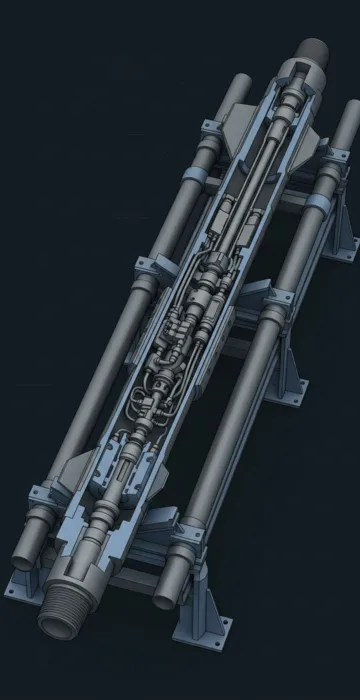
- Friction. A sliding string drags along the low side of the hole, so it's hard to get weight to the bit. Rotation breaks that friction.
- Hole cleaning. Rotation stirs up the cuttings bed on the low side. Sliding lets cuttings pile up.
- Rate of penetration. Sliding ROP is often much slower than rotating ROP.
- Hole quality. Alternating slides and rotation leaves small doglegs and ledges (often called tortuosity). That makes it harder to run casing and adds torque and drag later.
- Toolface control. Holding a steady toolface while sliding gets harder with depth because reactive torque and drag wind up the string.
In a short vertical well, these effects are small. In a long horizontal lateral, they can decide whether you reach total depth at all.
When to Use a Mud Motor
Mud motors still win plenty of jobs. They're a sensible choice when:
- The well is short, shallow or mostly vertical.
- The budget is tight and RSS rental costs would not pay back.
- Conditions are very hot or harsh enough to threaten RSS electronics.
- Lost circulation or a high risk of stuck pipe makes leaving an expensive tool in the hole unacceptable.
- You need extra power at the bit, since the motor adds its own rotation on top of surface rotation.
In many shale programs, operators drill the vertical and even the curve with a motor and save the RSS for long or difficult laterals. Others run RSS from kickoff to TD. Both approaches are common, and the choice often comes down to cost per foot.
Which Tool Builds Angle Faster?
Build rate, measured as dogleg severity in degrees per 100 feet, is where motors have traditionally held their ground. A motor with a larger bend can build a tight curve, and that has made motors popular for drilling the curve section of horizontal wells.
RSS designers have closed much of that gap with high-build-rate tools, and many operators now drill curves with them. Still, the highest build rates and the cheapest curves often come from a well-chosen motor. For planning, the rule is simple: match the tool's build capability to the curve you need, with some margin, so you aren't forced to trip because the tool can't keep up.
Can You Use Both Together?
Yes. Some bottomhole assemblies place a mud motor above the rotary steerable tool. The motor adds speed and torque at the bit, while the RSS does the steering. This setup can raise drilling speed and lower the load on the drill string, at the cost of a longer, more expensive assembly with more parts that can fail.
Rotary Steerable vs Mud Motor at a Glance
| Factor | Mud motor (bent housing) | Rotary steerable system |
|---|---|---|
| Steering method | Slide to steer, rotate to hold | Steers while rotating |
| Hole quality | More tortuosity from slide-rotate cycles | Smoother wellbore |
| Hole cleaning | Weaker while sliding | Better with constant rotation |
| Long laterals | Harder; friction limits sliding | Well suited |
| Cost | Lower | Higher |
| Complexity | Simple, rugged | Electronics, sensors, actuators |
| Loss-in-hole risk | Cheaper to lose | Expensive to lose |
Rigzone's explainer on how directional drilling works gives some helpful background on why steering tools developed the way they did.
Rotary Steerable System or Mud Motor: Which Steers Better?
Here's my plain verdict: a rotary steerable system steers better. Continuous rotation gives a smoother, cleaner hole and makes long or complex wells possible. If the well is long, the target is tight or hole quality matters for the completion, RSS is usually worth the money.
A mud motor, though, is the better value for many simpler wells. It is cheap, tough and well understood. The smart way to decide is to compare cost per foot, risk and the well's demands for each section, not to pick one tool for everything. Ask your directional company to run both scenarios for the same well plan. The numbers usually make the choice obvious.