What Is a Subsea Tree?
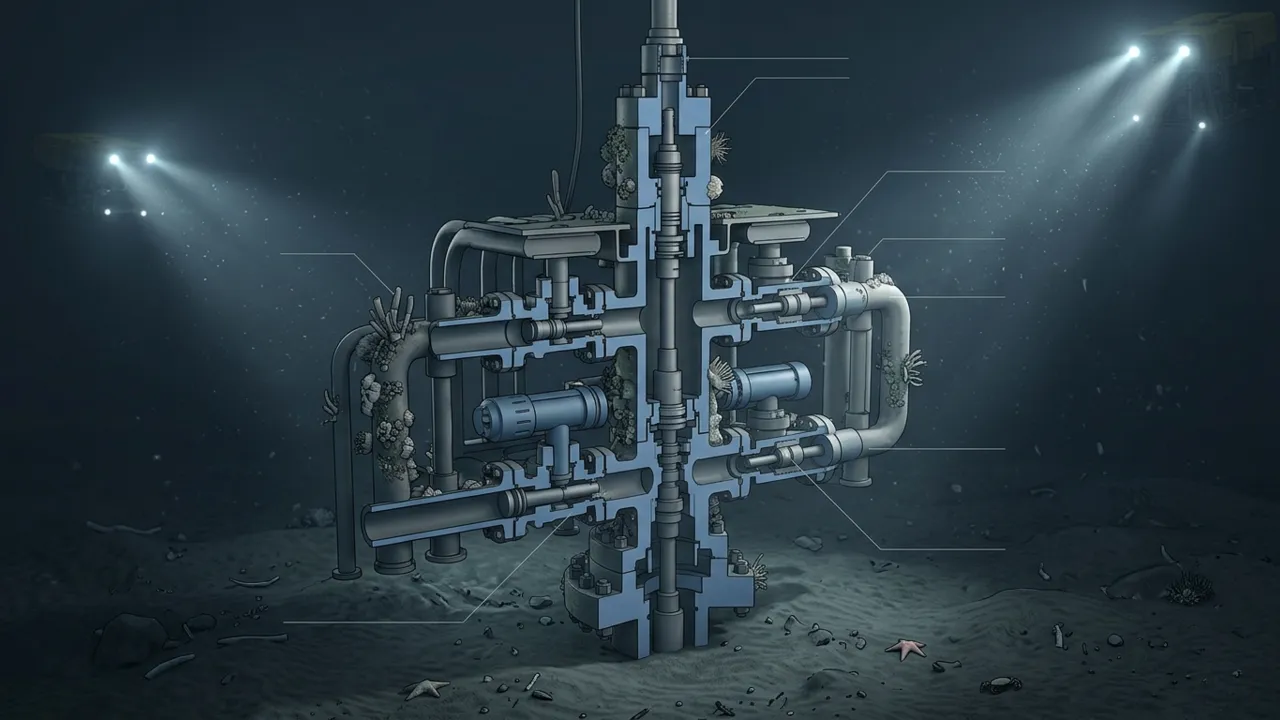
On land, the valve stack on top of a producing well is easy to spot. Folks call it a Christmas tree, and you can walk right up and turn a handwheel. Offshore, many wells end on the seafloor instead, thousands of feet down, where nobody is turning anything by hand. Those wells still need a way to control flow and shut in safely. So what is a subsea tree, and how is it different from the one on land?
A subsea tree is a valve assembly mounted on a subsea wellhead that controls the flow of oil and gas from a well on the seafloor. It does the same basic job as a land Christmas tree: open the well, choke production, inject chemicals, and shut the well in when needed. The difference is that a subsea tree, often called a wet tree, is operated remotely through hydraulic and electrical controls from a host facility. Its valves are designed to fail closed, so the well shuts in if control is lost. The two main designs, vertical and horizontal, differ in where the tubing hanger sits.
Why Is It Called a Christmas Tree?
The name comes from the land version. Early wellhead valve stacks, with their branches and valves sticking out at angles, looked a bit like a decorated tree. The nickname stuck and moved offshore with the equipment.
The SLB Energy Glossary has a straightforward definition of the Christmas tree that covers both surface and subsea versions. Offshore, people just say "tree" most of the time.
What Does a Wet Tree Do?
A wet tree is simply a tree that sits underwater, as opposed to a dry tree on a platform deck. It has several jobs:
- Contain well pressure and provide a barrier against uncontrolled flow
- Control production rate through a choke
- Shut in the well automatically if something goes wrong
- Allow chemical injection to prevent hydrates, scale or corrosion
- Monitor pressure and temperature at the wellhead
- Provide access for well intervention
It also connects the well to the rest of the subsea system. Production leaves the tree through a jumper or flowline and heads for a manifold or straight to a host facility.
What Are the Main Subsea Tree Components?
Designs vary by manufacturer and field, but most subsea trees share the same core parts.
| Component | Purpose |
|---|---|
| Tree connector | Latches the tree onto the subsea wellhead |
| Production master valve | Primary valve in the production path |
| Production wing valve | Isolates the tree's outlet to the flowline |
| Swab valve | Provides vertical access into the well for intervention |
| Annulus valves | Monitor and control the annulus between tubing and casing |
| Choke | Adjusts the production rate |
| Subsea control module | Turns signals and hydraulic supply into valve movement |
| Sensors | Read pressure and temperature for the operators |
| ROV panel | Lets an ROV operate valves manually if needed |
The valves are typically gate valves held open by hydraulic pressure against a spring. Lose the pressure and the spring closes the valve. That fail-safe design is the heart of subsea safety.
Vertical vs Horizontal Subsea Tree: What's the Difference?
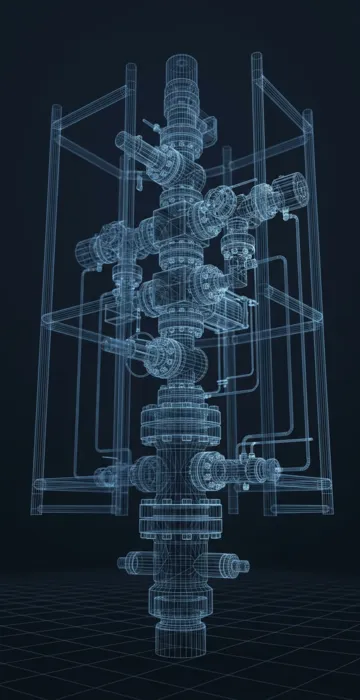
The main difference is where the tubing hanger sits. That one detail changes how the well is completed and how it's worked over later.
Vertical Subsea Tree
In a vertical tree, also called a conventional tree, the tubing hanger lands in the wellhead first. The tree then goes on top. The master and swab valves are stacked vertically in the bore above the hanger.
The advantage is that the tree can be pulled and replaced without pulling the tubing. The downside is that if you need to pull the tubing, the tree has to come off first.
Horizontal Subsea Tree
In a horizontal tree, sometimes called a spool tree, the tree goes on the wellhead before the completion. The tubing hanger then lands inside the tree body, and the production valves are on the side outlet instead of in the vertical bore.
The advantage is that the tubing can be pulled through the tree, with a BOP on top, without removing the tree. The downside is the reverse of the vertical design: pulling the tree means pulling the completion first.
Which Design Wins?
Neither one. If an operator expects frequent tubing workovers, a horizontal tree often makes sense. If tree replacement is the more likely job, a vertical tree may be better. I'd say the choice says a lot about what the operator expects to go wrong over the life of the well.
How Is a Subsea Tree Installed?
Trees are installed by a drilling rig or, increasingly, by a specialized intervention vessel. The tree is lowered on a running tool and landed on the wellhead with help from an ROV.
The rough order is drill and case the well, install the tree (before or after the completion, depending on design), then connect jumpers, flying leads and controls. Everything is pressure tested before the well is opened up.
How Much Pressure Can a Subsea Tree Handle?
Subsea trees are rated by working pressure, with 10,000 psi and 15,000 psi among the common ratings. Some high-pressure, high-temperature fields need trees rated higher still.
Ratings follow industry standards, and choosing one comes down to the reservoir's expected shut-in pressure and temperature. Water depth also matters, since the tree sits under the pressure of the sea.
Where Are Subsea Trees Used?
Anywhere operators produce from wells without a platform directly overhead. That includes deepwater fields with floating production vessels, small fields tied back to existing hosts, and developments spread over a wide area.
The Gulf is one of the busiest subsea regions in the world, with trees tied back to many of the platforms and floating facilities people think of as Gulf of Mexico oil rigs. Brazil, the North Sea and West Africa use them heavily as well.
What Is a Subsea Tree? The Well's Control Panel on the Seafloor
A subsea tree is the valve assembly on top of a subsea well. It controls flow, shuts in the well if anything fails, and connects the well to the rest of the subsea system.
It works like a land Christmas tree but is operated remotely, with fail-safe valves and ROV backup. Vertical trees put the tubing hanger in the wellhead. Horizontal trees put it in the tree, which changes how workovers happen.
If you're learning subsea equipment, the next step is following the flow downstream from the tree, through jumpers and manifolds to the host facility.