How Does a Tricone Bit Work?
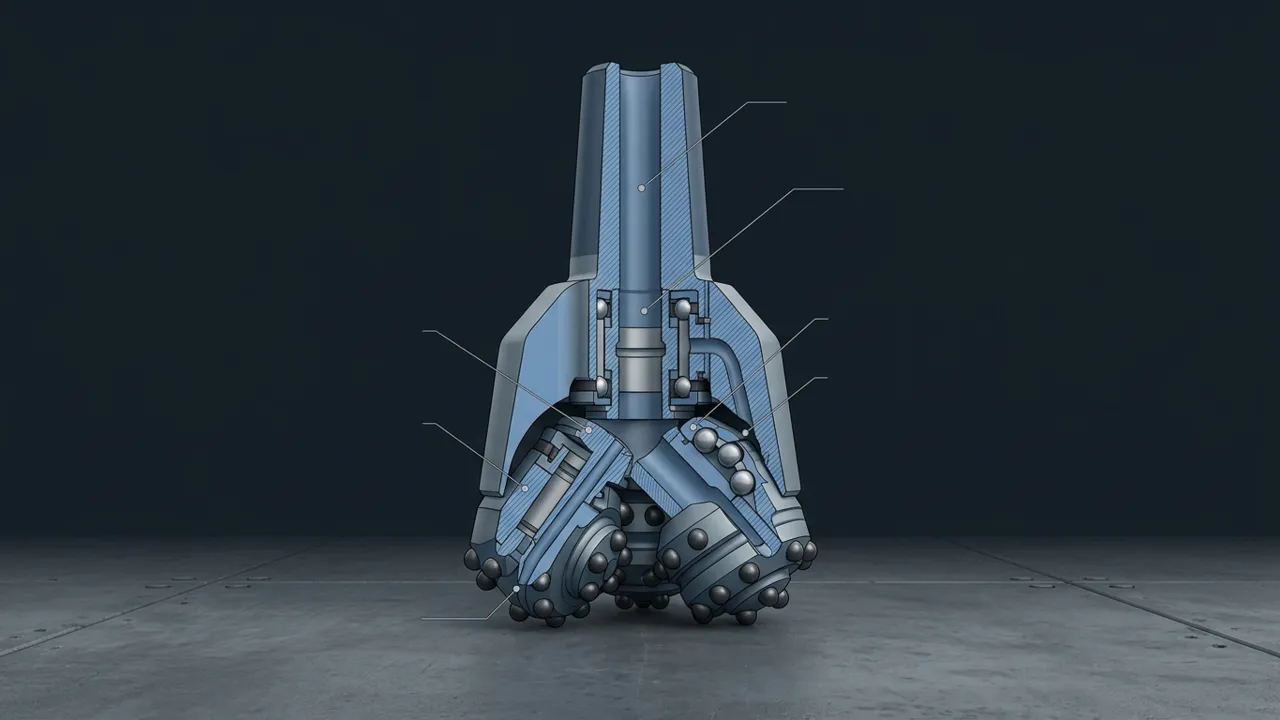
A tricone bit looks almost mechanical in an old-fashioned way: three toothed cones tucked together under a steel body, ready to roll. PDC bits may get most of the attention today, but roller cone bits drilled the oil industry through most of the last century, and they still have work to do. If you've ever held one, you've probably wondered how those three cones manage to chew through solid rock. So how does a tricone bit work?
A tricone bit works by rolling three toothed cones across the bottom of the hole as the bit rotates, so the teeth or inserts crush, chip and gouge the rock under weight. Each cone is mounted on a bearing attached to one of the bit's three legs, and it turns as the bit turns, much like the wheels of a cart rolling in a circle. Weight on bit drives the teeth into the rock, and a slight offset in the cones adds a scraping action in softer formations. Mud from the nozzles washes the chips away so the teeth always hit fresh rock.
Tricone bits come in milled tooth designs for soft rock and tungsten carbide insert (TCI) designs for harder rock.
What Is a Roller Cone Bit?
A roller cone bit is any drill bit with cones that rotate on bearings while the bit turns. The tricone, with three cones, is by far the most common kind. The SLB glossary describes the roller cone bit as a bit that crushes rock with rolling cutters.
The main parts are easy to picture:
- Body and pin: the top of the bit, with a threaded pin that screws into the drill string.
- Three legs: forged arms that hang down from the body, each ending in a journal (a short shaft).
- Three cones: mounted on the journals, carrying rows of teeth or inserts.
- Bearings and seals: let the cones turn on the journals and keep mud out.
- Nozzles: jets that send mud onto the bottom of the hole.
How Do the Cones Actually Cut the Rock?
The cones cut by a mix of crushing and gouging. Here's what happens, step by step:
- The driller puts weight on the bit, pressing the teeth into the rock.
- As the drill string turns, each cone rolls around the bottom of the hole.
- Each tooth presses down as it rolls under the cone, cracking and crushing the rock beneath it.
- In softer rock, cone offset makes the teeth skid slightly as they roll, adding a gouging, scraping cut.
- Mud jets clear the broken chips so the next tooth lands on fresh rock.
Cone offset is where it gets clever. If each cone's axis pointed exactly at the center of the bit, the cones would roll cleanly with very little sliding. Shifting the axes slightly off center forces the cones to drag a bit as they roll. Soft formation bits use more offset to dig and scrape. Hard formation bits use little or none, relying on pure crushing.
The teeth on neighboring cones also intermesh, so they pass between each other's rows. That helps keep the cones from packing up with soft, sticky cuttings.
TCI vs. Milled Tooth: What's the Difference?
The difference is how the teeth are made. Milled tooth bits have teeth machined from the cone steel itself. TCI bits have tungsten carbide inserts pressed into holes drilled in the cones.
| Feature | Milled tooth | TCI |
|---|---|---|
| Cutting elements | Steel teeth cut from the cone, often hardfaced | Tungsten carbide inserts pressed into the cone |
| Best formations | Soft, like clays and soft shales | Medium to very hard |
| Tooth shape | Long, widely spaced | From long chisels to short, rounded domes |
| Wear resistance | Lower | Higher |
| Cost | Lower | Higher |
A good rule of thumb: the harder the rock, the shorter and more closely packed the cutting elements. Long teeth bite deep into soft rock. Short, blunt inserts survive hard rock without breaking.
How Do Tricone Bearings Work?
Tricone bearings let each cone spin on its journal while carrying the full weight on bit. They're often the part that decides how long a tricone run can last, so their design matters a lot.
There are three main types:
- Open roller bearings: rollers and balls lubricated by the drilling mud itself. Simple and cheap, but mud wears them faster.
- Sealed roller bearings: rollers and balls packed in grease and sealed from the mud. They last longer.
- Sealed journal (friction) bearings: the cone rides directly on a hardened journal surface with grease, sealed from mud. These carry heavy loads well and are common in premium bits.
Sealed bits have a grease reservoir and a pressure compensator so the grease stays at about the same pressure as the mud outside. That keeps mud from pushing past the seal. A row of ball bearings usually locks each cone onto its journal so it can't slide off.
What Do the Rows on a Tricone Cone Do?
Each cone carries several rows of teeth, and they don't all do the same job. The inner rows cut the bottom of the hole. The heel row and gauge row on the outer edge cut the corner and the wall, keeping the hole at full diameter.
Gauge wear is a big deal. If the outer row wears down, the bit drills an undersized hole, and the next bit can get pinched going in. That's why many bits have extra gauge protection, such as tougher inserts on the outer edge.
Where Do Tricone Bits Still Win?
PDC bits drill much of today's footage, but tricones still win in several situations:
- Very hard, broken or interbedded rock, where PDC cutters chip from impact.
- Large-diameter surface holes, where a tricone is often a simple, low-cost choice.
- Situations where low, steady torque matters, since tricones generally drill with less torque than PDC bits.
- Some drill-out and cleanout runs, where a durable, forgiving bit is wanted.
- Air drilling in some hard formations.
For a side-by-side look at how they stack up against fixed cutter bits, the Rigzone explainer on how a drill bit works covers both families.
What Can Go Wrong With a Tricone Bit?
Tricone failures usually trace back to the bearings or the cutting structure:
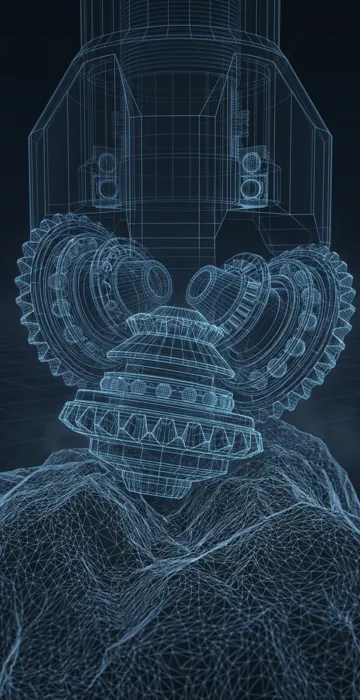
- Bearing failure: a worn or locked bearing stops a cone from turning, so it drags and wears flat.
- Lost cone: in severe cases, a cone can come off and stay in the hole as junk, which means a fishing job.
- Broken teeth or inserts: from impact in hard rock or from running too much weight.
- Seal failure: lets mud into the bearing, which then wears out fast.
Drillers watch torque closely on tricone runs. Rising or erratic torque can be an early sign of a bearing going bad, and pulling the bit before a cone comes off is far better than fishing for it.
A tricone is one of many downhole tools that have to work together in the BHA. Its job is simple to describe and hard to do: keep breaking rock, foot after foot.
How Does a Tricone Bit Work, and When Should You Use One?
A tricone bit works by rolling three cones over the bottom of the hole, pressing teeth or inserts into the rock to crush and gouge it. Cone offset adds scraping in soft rock, sealed bearings carry the load, and mud jets keep the bottom clean.
Choose milled teeth for soft rock and TCI for harder rock. Keep a tricone in mind wherever impact, hard stringers or torque limits would beat up a PDC bit. And when you pull one out, look closely at the gauge, the cones and the bearings, because the dull tells you exactly how the run went.