Wellhead vs. Christmas Tree – What's Bolted on Top of a Well?
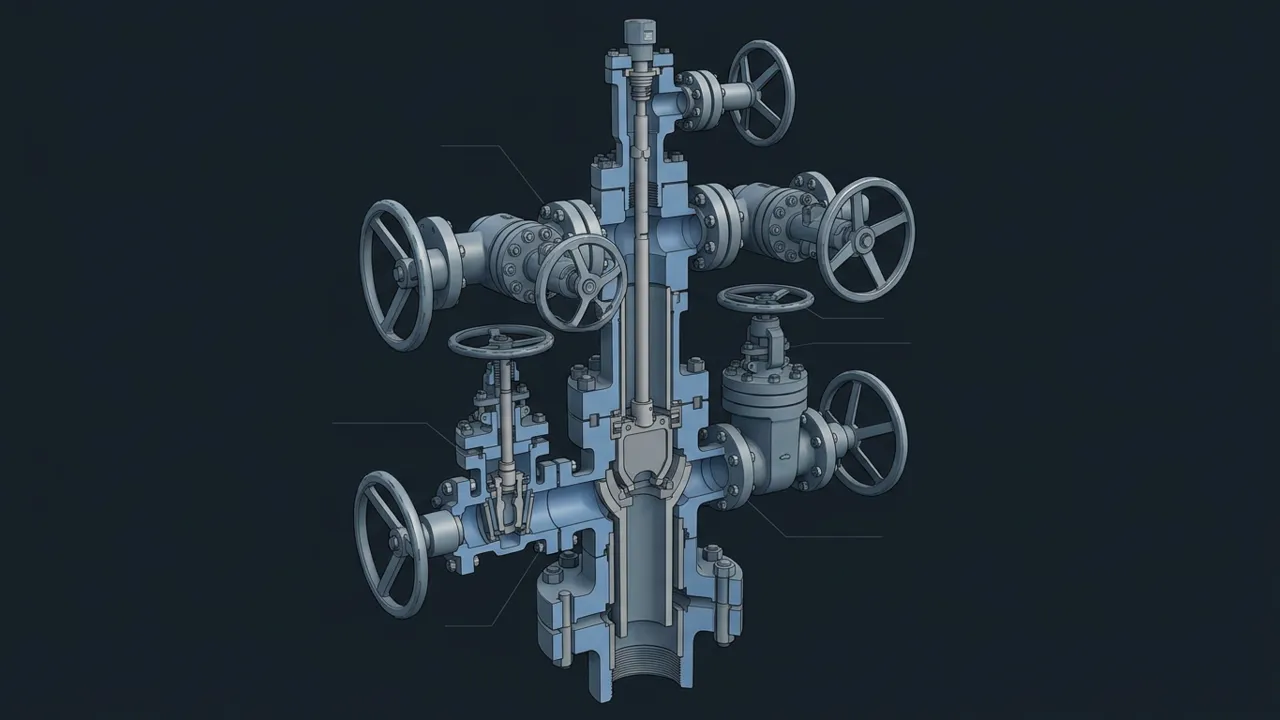
Drive past a producing well and you'll see a short stack of steel spools and valves sticking up out of the ground, often painted and fenced. People call the whole thing a wellhead, or a Christmas tree, or both, and they use the words like they mean the same thing. They don't. Knowing which part is which matters the first time a valve leaks or somebody asks you to "close the master." So what's the difference between a wellhead and a Christmas tree, and what are all those Christmas tree valves for?
The wellhead is the base: the heavy spools at surface that hang and seal the casing and tubing strings and contain pressure in each annulus. The Christmas tree is the assembly of valves, fittings and a choke bolted on top of the wellhead that controls the flow coming up the tubing. In short, the wellhead holds the pipe, and the tree runs the well. A wellhead is installed during drilling and stays for the life of the well. The tree goes on after completion and can be swapped or changed, and on rod-pumped wells it's often replaced by a much simpler valve and stuffing box setup.
What Is Wellhead Equipment Made Of?
Wellhead equipment is built from the bottom up as each casing string is run during drilling. A typical land well includes:
- Casing head (or "A section"). Attached to the surface casing. It supports the next casing string and has side outlets to monitor that annulus.
- Casing spool (or "B section"). Stacks on top and hangs the next, smaller casing string. Deeper wells with more strings have more spools.
- Casing hangers and pack-offs. Slip or mandrel hangers carry the casing weight; seals isolate each annulus.
- Tubing head. The top spool, which holds the tubing hanger.
- Tubing hanger. Suspends the production tubing and seals the tubing annulus.
- Annulus valves. Side valves on each section to monitor or bleed annulus pressure.
During drilling, the blowout preventer stack sits on top of the wellhead. Once the well is completed, the BOP comes off and the tree goes on. The SLB entry on the wellhead describes it as the surface termination of the wellbore, which is a good way to think about it.
What Are the Christmas Tree Valves and What Does Each One Do?
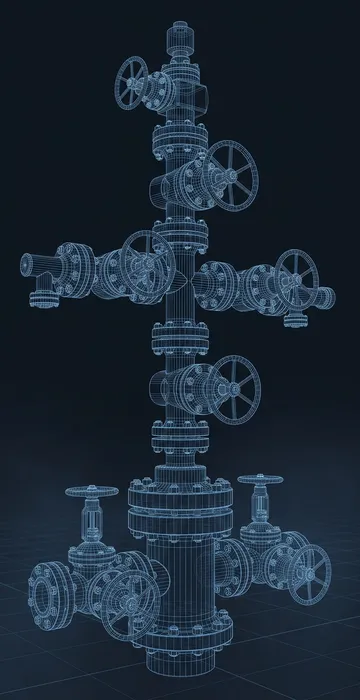
Christmas tree valves are stacked so there's more than one way to stop the flow, with the most important valves closest to the wellhead. On a typical tree, from the bottom up:
- Lower master valve. The bottom valve in the vertical run. It's the last line of defense at surface and is usually operated by hand and left open.
- Upper master valve. Above the lower master. On many wells it's hydraulically or pneumatically actuated and works as a surface safety valve that closes automatically on an alarm.
- Production wing valve. On the side outlet that sends flow toward the flowline. Often the valve used for routine shut-ins.
- Kill wing valve. On the opposite side outlet, used to pump fluids into the well, such as kill fluid or chemicals.
- Choke. Downstream of the production wing. It sets the flow rate by restricting the flow path.
- Swab valve. The top valve in the vertical run. It gives vertical access for wireline or coiled tubing.
- Tree cap. Seals the top, usually with a pressure gauge so you can read tubing pressure.
The layout varies. Some trees have dual master valves, extra wing valves, or are built as a solid block instead of stacked valves. Subsea trees look very different but do the same basic jobs.
Master Valve and Wing Valve: Which Do You Close First?
For a routine shut-in, close the wing valve first, then the master if the procedure calls for it. The wing valve takes the wear of everyday operation so the master valves stay in good shape for when you really need them.
The logic is simple. Master valves are the well's emergency barriers. If you use them for everyday opening and closing, the gates and seats wear, and the day you need them to hold full pressure, they might not.
Opening is the reverse. Masters open first, against no flow, then the wing valve, then the choke is brought up slowly. Follow your company's sequence, though. Some operators spell out a different order for specific wells, and their procedure wins.
Don't make this mistake: closing a valve on wireline or coiled tubing that's running through the tree. Gate valves aren't designed to cut pipe or cable, and you'll damage the valve and possibly drop tools downhole. Confirm the hole is clear first.
Why Is It Called a Christmas Tree on an Oil Well?
The name comes from the shape. A vertical stack with valves branching off the sides, often with handwheels and gauges sticking out, reminded early oil workers of a decorated tree. The nickname stuck, and today it's the standard term everywhere, including in engineering standards. The SLB glossary covers the Christmas tree as the valve assembly on top of a completed well.
Does Every Well Have a Christmas Tree?
No. Wells that flow on their own, gas wells and most offshore wells have a full Christmas tree. Wells on pumps often don't.
A well with a pump jack, for example, uses a pumping tee and a stuffing box where the polished rod moves up and down. There's no need for a full tree because the well doesn't flow by itself. Wells with electric submersible pumps or gas lift usually keep a tree, modified for power cable or gas injection. Each of the artificial lift systems changes what sits on top of the wellhead.
Wellhead vs. Christmas Tree at a Glance
| Wellhead | Christmas tree | |
|---|---|---|
| Main job | Hangs and seals casing and tubing | Controls and directs flow from the tubing |
| When installed | During drilling, one section per casing string | After completion |
| Stays for life of well? | Yes | Can be changed or removed |
| Main parts | Casing head, spools, hangers, tubing head | Master, wing and swab valves, choke, cap |
| Pressure handled | Annulus pressures and string weights | Tubing (production) pressure |
What Are the Warning Signs of Trouble at the Wellhead?
Here's what to watch for on any wellhead or tree, and what it usually points to. Report it, and let the lease operator, foreman or company man decide the response.
- Pressure on an annulus gauge that shouldn't have any. Can mean a leak in tubing, a packer or a casing seal.
- Weeping or dripping at flanges or valve stems. Loose bolts, worn packing or a failed ring gasket.
- A valve that won't fully close or turns too easily. Possible gate or stem damage.
- Frost or ice on the choke body. Normal with high gas pressure drops, but it can also mean hydrates are forming.
- Hissing or the smell of gas. Back away, check for H2S if it's a sour field, and call it in.
Wellhead or Christmas Tree: Which One Is Really on Top?
Both are, in a way. The wellhead sits at the bottom of the stack and holds the pipe. The Christmas tree sits on top of the wellhead and controls the flow.
The Christmas tree valves follow a clear order: two masters for safety, wings for daily work and pumping in, a choke for rate and a swab for vertical access. Use the wing for routine shut-ins and save the masters for when it counts.
Next time you're on location, walk the stack from the ground up and name each piece. Once you can do that, the job procedures will make a lot more sense.