What Is Geothermal Drilling? – How Oilfield Rigs Drill for Heat
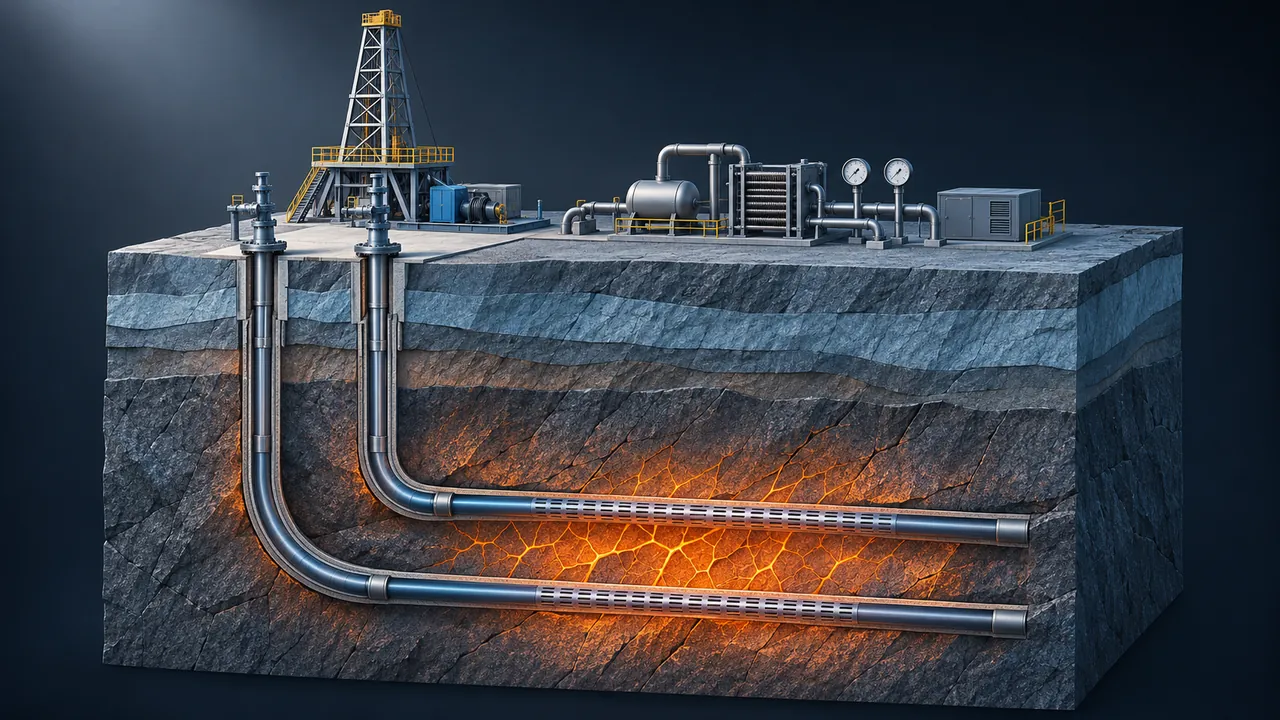
Oilfield people hear the word geothermal and picture hot springs or a power plant in Iceland. Fair enough. But a growing share of geothermal drilling in the United States now looks a lot like a shale pad: a big land rig, a long horizontal lateral, PDC bits and a frac spread on location. So what changes when the target is heat instead of hydrocarbons? What is geothermal drilling, and how are oilfield rigs being used to drill for heat?
Geothermal drilling is the work of drilling wells into hot rock so water or steam can carry that heat to the surface for power or direct use. Traditional projects drill into natural hydrothermal reservoirs, where hot water already sits in fractured rock. Enhanced geothermal systems (EGS) go after hot rock that is too tight to flow on its own, then create a fracture network so water can circulate between an injection well and a production well. That second approach borrows directly from shale. The big differences are heat, hard crystalline rock and larger flow volumes, which change the bits, mud, tools and casing.
How Does Geothermal Drilling Work?
Geothermal drilling works much like any other rotary drilling job. A rig turns a drill string, a bit grinds or shears the rock, and mud pumps circulate fluid to cool the bit and carry cuttings out of the hole. Casing gets run and cemented in stages as the well gets deeper.
The goal is what sets it apart. An oil well is drilled to reach a reservoir of hydrocarbons and then keep that fluid moving. A geothermal well is drilled to reach heat, then move a lot of water through that heat for decades. Rate matters more than almost anything else, because a power plant needs a steady, high flow of hot fluid to make electricity.
There are three broad kinds of geothermal wells:
- Hydrothermal wells tap natural reservoirs of hot water or steam, usually in volcanic or tectonically active areas.
- Enhanced geothermal wells target hot, dry or tight rock and use hydraulic stimulation to open flow paths.
- Closed-loop systems circulate fluid through sealed pipe underground with no contact with the rock. They are still early, with only a handful of pilot and first commercial projects.
How Is a Geothermal Well Different From an Oil and Gas Well?
The short answer is heat and hard rock. Most oil and gas wells are drilled through sedimentary layers like shale, sandstone and limestone. Many geothermal targets sit in granite or other crystalline rock that is harder and more abrasive. The heat is not a side issue either. It is the whole point of the well.
Here is how the two compare on the things a drilling crew actually deals with.
| Factor | Typical shale oil or gas well | Typical enhanced geothermal well |
|---|---|---|
| Rock | Sedimentary (shale, sandstone, carbonates) | Crystalline (granite and similar hard rock) |
| Main design goal | Reservoir contact for hydrocarbons | High water flow through hot rock |
| Bit wear | Moderate in most laterals | Heavy; abrasive rock shortens bit runs |
| Temperature limits | Usually within standard tool ratings | Pushes mud, motors, electronics and cement |
| Casing | Sized for production rates and frac pressure | Often larger, built to handle thermal cycling |
| Well life | Production declines over years | Expected to circulate for decades |
Heat Changes the Mud and the Tools
Heat breaks things downhole. Elastomers in mud motor stators swell and break down, electronics in measurement-while-drilling tools quit once they pass their temperature rating, and some mud additives stop doing their job. Crews fight back by cooling the mud at surface, choosing tools rated for high temperature and keeping circulation going so the bottom of the hole never gets a chance to heat soak the string.
Mud coolers are a good example. In shale they are a nice-to-have on deep, hot wells. In geothermal they can decide how far you get before something quits.
Casing Has to Live With Big Temperature Swings
Steel grows when it heats and shrinks when it cools. A geothermal well sees cold fluid during drilling, stimulation and injection, hot fluid once it produces, and a swing every time it shuts in, so the casing and cement have to survive that movement without cracking or buckling. Cement blends and casing connections get extra attention for this reason. Production wells also tend to use larger casing, because more flow means more power.
Can Oil Rigs Drill Geothermal Wells?
Yes, and they already do. Geothermal wells have been drilled with oilfield-style rotary rigs for a long time. What is new is the type of well. Modern EGS projects use the same high-spec land rigs, top drives and directional tools that drill shale laterals, because the well designs now include long horizontal sections.
That shift came straight out of the shale playbook. If you have followed how horizontal drilling opened up tight shale, the geothermal logic is the same. A horizontal well exposes far more rock than a vertical one, and multistage stimulation along the lateral creates many flow paths instead of one.
Not every rig is a fit, though. A geothermal job may need a rig with enough hook load and pump capacity for large casing and high flow rates, plus room on location for cooling equipment. The rig is rarely the limit. The downhole gear and the rock usually are.
What Is Fervo Doing in Utah?
Fervo Energy is the best-known example of an oil and gas approach to geothermal. Its Cape Station project in Beaver County, Utah, uses horizontal well pairs and multistage stimulation in hot granite.
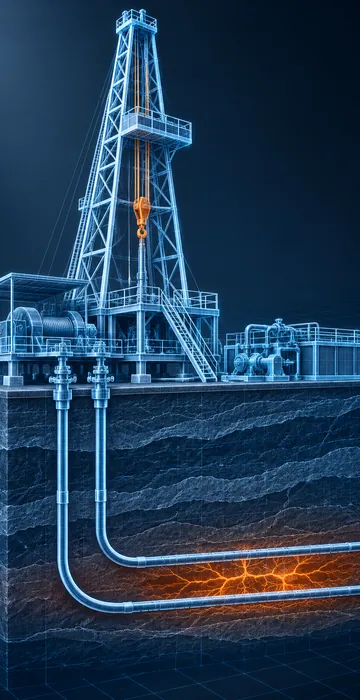
Trade press reported that the first 33 MW unit synchronized to the grid on September 24, 2026, and Fervo declared commercial operation six days later. The other two 33 MW units of the roughly 100 MW first phase are expected to reach commercial operation by January 1, 2027. A second phase of about 400 MW is under construction, with operation expected in 2028.
The drilling side is what caught the oilfield's attention. In a February 2024 release, Fervo reported that its fastest Cape well took 21 days, a 70% cut in drilling time compared with its first horizontal geothermal well, drilled at Project Red in Nevada in 2022. The company credited PDC bits of the kind used in shale basins, mud coolers to handle the heat, and better bit life and rate of penetration. It also reported that drilling cost per well fell from $9.4 million to $4.8 million across its first four horizontal Cape wells.
My take: those are company-reported numbers, and early learning curves always look steep. Still, the pattern matches what happened in shale. The first wells in a new play are slow and expensive, and then crews figure it out.
What Is Utah FORGE?
Utah FORGE (Frontier Observatory for Research in Geothermal Energy) is a field laboratory funded by the U.S. Department of Energy near Milford, Utah, and run by the University of Utah. It exists to test EGS methods in hot granite and share the results openly, which is something private developers do not always do.
The project drilled a highly deviated injection well and a production well, then stimulated both. According to the Department of Energy's August 2026 update, the team stimulated the wells in April 2024 and ran a 30-day circulation test that August, injecting cool water at 10 barrels per minute and producing water at about 370°F. In August 2026 FORGE started an extended circulation test lasting months, to measure pressure stability, water recovery, heat extraction and thermal decline over time.
Those long-term questions matter more than any single drilling record. A geothermal reservoir only pays off if it keeps producing hot water at a steady rate without losing too much of it to the rock.
How Deep Are Geothermal Wells?
It depends on how hot the rock is and how close that heat sits to the surface. In volcanic areas, useful heat can be a few thousand feet down. In most other places you have to go much deeper, because temperature rises gradually with depth across most of the continent.
Enhanced geothermal wells in places like Utah reach well past 10,000 feet. ThinkGeoEnergy reported in June 2025 that a Fervo appraisal well at Cape reached about 15,765 feet of vertical depth with a projected bottomhole temperature near 500°F. In July 2026 the same outlet reported a Phase II well with a measured depth of 19,448 feet, including a 7,500-foot lateral, drilled in 21 days.
Those depths and lateral lengths would look ordinary on a Permian pad. The 500°F would not. That mix of familiar well geometry and unfamiliar heat is exactly why oilfield rigs and crews fit the work, and why their tools need upgrades.
Why Do Oilfield Crews Fit Enhanced Geothermal Systems?
Enhanced geothermal systems need the exact skills the shale boom built: drilling long laterals on time, running multistage stimulation, managing big water volumes and keeping costs down well after well. Those skills already live in oilfield crews, service companies and supply chains.
Here is what transfers almost directly:
- Directional drillers who can steer a lateral through a target zone.
- Frac crews and pumping equipment for multistage stimulation.
- Pad drilling, where several wells share one location and one rig move.
- Bit and BHA know-how for fighting abrasion and vibration.
- Cementing and casing crews who understand pressure and temperature loads.
And here is what has to be learned or adapted: higher temperatures than most oil hands ever see, crystalline rock that eats bits, lost circulation in fractured granite, and the fact that the "product" is heat that has to keep flowing for decades. A geothermal company man cares about water recovery the way a shale company man cares about oil cut.
What Are the Pros and Cons of Geothermal Drilling?
Geothermal has real strengths and real hurdles. Neither side of the debate tells the whole story.
The pros: geothermal power runs around the clock instead of following the weather. It uses a small surface footprint once the wells are in. It can put idle oilfield rigs and skilled crews back to work, and it uses equipment and methods the industry already owns.
The cons: drilling is a large share of project cost, and hard, hot rock is expensive to drill. Stimulation can trigger small earthquakes, so projects need careful monitoring. Water supply and water loss need managing. And EGS is still early, so long-term reservoir performance is being proven in real time rather than taken from decades of history.
Same Rigs, Hotter Rock: What Geothermal Drilling Really Asks of an Oil Hand
So what is geothermal drilling? It is drilling for heat instead of hydrocarbons, and in its enhanced form it uses the same horizontal wells, multistage stimulation and high-spec rigs that changed shale. The rig floor looks familiar. The rock, the heat and the long-term goal do not.
The Utah projects show the transfer is real, from Fervo's commercial power at Cape Station to the open research at FORGE. The open question is not whether oilfield rigs can drill these wells. It is how cheaply and reliably the industry can do it hundreds of times over.
For a hand thinking about the move, start with the gaps: high-temperature tools, hard rock bit programs and well designs built for decades of hot water. That is where the next round of learning will happen.