How Is an Oil Well Plugged and Abandoned?
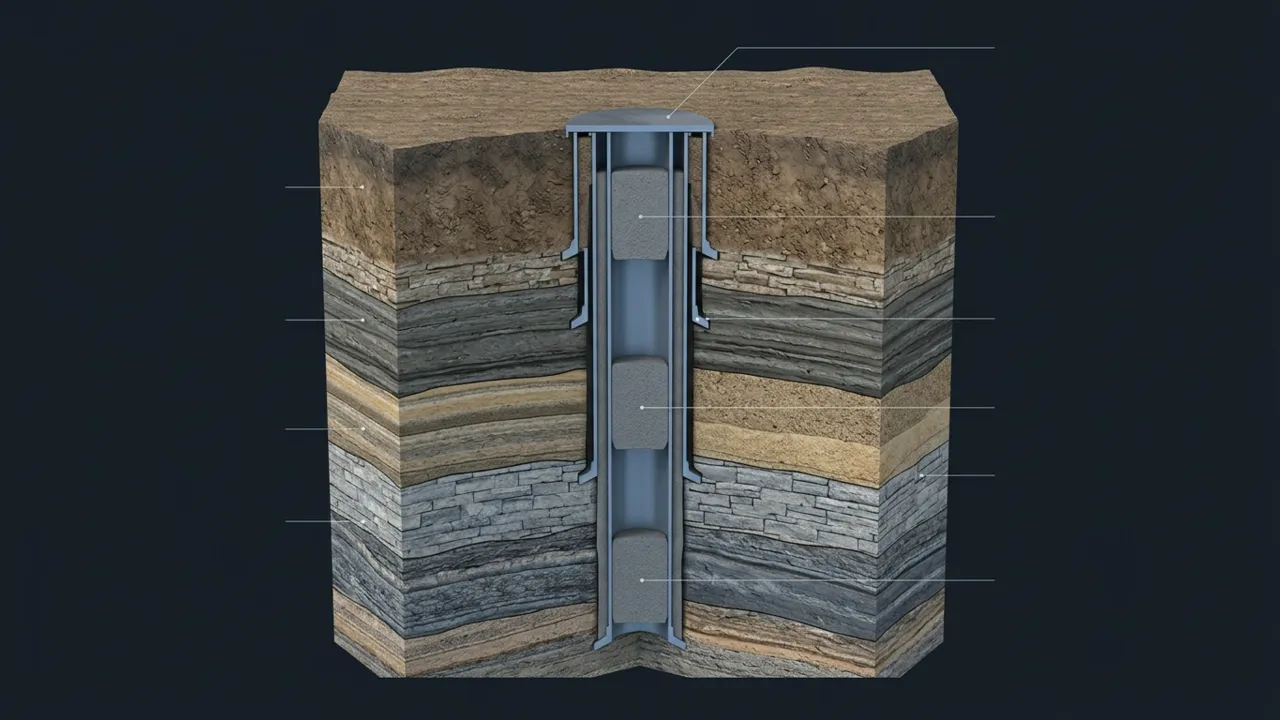
Every oil and gas well eventually stops paying its way. The pump keeps running, but the oil barely trickles and the water keeps climbing. At some point, the well has to be shut down for good, a job called well abandonment. Done right, it disappears under a pasture or a field and stays sealed for generations. Done wrong, it can leak for decades. So how is an oil well plugged and abandoned?
An oil well is plugged and abandoned by removing equipment from the hole, placing cement plugs (often with mechanical bridge plugs) at key depths to seal off oil, gas and water zones, cutting the casing off below ground and restoring the surface. The plugs isolate producing zones from each other and protect underground drinking water, then a final surface plug seals the top. Each plug is placed according to state or federal rules and is often tagged or pressure tested to confirm it is in the right spot. This process, called well abandonment or P&A, is regulated in detail, and the requirements depend on where the well is.
Why Does Well Abandonment Matter?
Well abandonment matters because a wellbore is an open path through every layer it crosses. Left unsealed, it can let gas, oil or salt water move up into freshwater aquifers or out at the surface. It can also leak methane into the air.
A properly plugged well restores the natural barriers that the drill bit cut through. The goal is permanent isolation, meaning the plugs should hold for an indefinite future, not just a few years.
There is also the surface. Old wellheads, tanks and pits are hazards to people, livestock and wildlife. Abandonment rules require that they be removed and the land restored.
What Are the Steps of Plug and Abandonment?
The exact plan is approved by the regulator, but most land well abandonments follow a sequence like this:
- Review the well file: casing depths, cement records, perforations and any known problems.
- Get the plugging plan approved by the state or federal regulator.
- Move in a workover rig or plugging unit and rig up.
- Kill the well with fluid if it has pressure.
- Pull rods, pump, tubing and any other downhole equipment.
- Check the wellbore and, if needed, log to evaluate casing and cement.
- Set a bottom plug over or above the producing perforations, often a cast iron bridge plug capped with cement.
- Set additional cement plugs at required depths, such as across other productive zones and at casing shoes.
- Set a plug across the base of usable or fresh water to protect aquifers.
- Tag plugs or pressure test them as required to confirm placement.
- Set the surface plug, cut the casing off below ground level and weld on a cap or plate.
- Remove surface equipment and restore the site.
Fluid left between the plugs is usually a heavy mud or brine that adds pressure and helps keep things in place.
What If There Is No Cement Behind the Casing?
This happens, especially on old wells. If the casing was never cemented across a key zone, crews may perforate the casing and squeeze cement into the gap behind it. Sometimes they mill out a section of casing to get cement directly against rock. These steps add time and cost, but they are often required to get a true seal.
How Is Each Cement Plug Placed?
Most cement plugs are placed by the balanced plug method. Cement is pumped down tubing or drill pipe to the target depth, then the pipe is pulled up slowly so the cement column stays in place. Once it sets, the crew lowers pipe to tag the top and confirm it is where it should be.
Mechanical bridge plugs give cement something to sit on. A cast iron bridge plug is set on wireline or tubing, then cement is dumped or pumped on top. This is common over perforations, where cement alone might fall into the open zone.
Regulators specify minimum plug lengths and locations, and those rules vary by state. The OSHA eTool on plugging and abandoning wells walks through the main operations and hazards on location.
Who Regulates Well Abandonment?
In the U.S., onshore well abandonment on private and state land is regulated by state agencies, such as the Railroad Commission of Texas or the Oklahoma Corporation Commission. Wells on federal land fall under the Bureau of Land Management, and offshore wells in federal waters under the Bureau of Safety and Environmental Enforcement.
Each regulator sets requirements for plug placement, testing, reporting and site restoration. Operators file a plugging record when the job is done, and inspectors may witness key steps. Rules also require operators to post bonds or other financial assurance, meant to cover plugging costs if the operator cannot pay.
How Much Does P&A Cost?
P&A cost varies enormously, and anyone giving a single number is oversimplifying. A shallow, simple onshore well with good records and no complications may be plugged for a modest sum, often in the tens of thousands of dollars. Deeper wells, wells with casing or cement problems, or wells requiring fishing can cost far more.
Offshore is a different world. Plugging a deepwater well and removing a platform can run into many millions of dollars per well, because of the vessels, equipment and regulatory requirements involved.
The main cost drivers include:
- Well depth and number of zones to isolate.
- Condition of the casing, cement and downhole equipment.
- Whether stuck equipment must be fished out.
- Access to the site and distance to rigs and cement crews.
- State plugging requirements.
- Site restoration work, including pit closure and soil cleanup.
What Are Orphan Wells?
Orphan wells are unplugged wells with no solvent owner responsible for them. The operator may have gone bankrupt, dissolved or simply disappeared, often decades ago. Some date back to the earliest days of drilling, before modern rules existed.

When there is no owner, the job falls to the state, usually funded by fees on the industry and forfeited bonds. Many states run orphan well programs that plug wells and clean up sites. Texas, for example, describes its approach on the Railroad Commission's environmental cleanup programs page.
The federal Infrastructure Investment and Jobs Act of 2021 set aside about $4.7 billion to help plug orphan wells and clean up sites. Even so, the total number of orphaned and undocumented wells is uncertain. Many old wells were never properly recorded, and states keep finding new ones.
Why Do Orphan Wells Happen?
Mostly because bonds have often been set too low to cover real plugging costs. When an operator fails, the bond does not pay for the work. Wells also pass through many owners over their lives, and the last owner may be a small company with little money. My take: the fix is not complicated in theory. Bonding that reflects actual P&A costs and prompt plugging of idle wells would prevent most new orphans.
Can a Plugged Well Leak?
Yes, though a well plugged to modern standards should stay sealed. Leaks happen when cement was poorly placed, when casing corrodes through and creates a path, or when old wells were plugged under weak rules with things like mud, wood or debris instead of cement.
That is why some older plugged wells get re-entered and re-plugged. It is also why new rules focus on proving plug placement and isolating every zone that matters. A good abandonment starts long before the end of a well's life. It starts with solid casing and cement during well completion, because those barriers are what the final plugs depend on.
What Happens to the Land After Abandonment?
After the casing is cut and capped, the operator removes equipment, closes any pits, cleans up contaminated soil and reshapes the surface. Gravel pads and roads may be removed and the area replanted, depending on the landowner's wishes and the regulator's rules.
Done well, the only sign of the well is a buried cap and a record in the state database. Some states require a marker at the surface. Others do not.
How Is an Oil Well Plugged and Abandoned? Seal Every Zone, Then Restore the Land
Pull the equipment, set cement and mechanical plugs across every zone that needs isolation, protect the freshwater, seal the top, cut the casing below ground and restore the land. That is well abandonment in a sentence. The details depend on the well and the regulator.
If you own land with an old well on it, check the state database for its status. If it is unplugged and has no active operator, contact your state's oil and gas regulator. That is the first step toward getting it plugged properly.