Drilling Line Slip and Cut – Ton-Miles and Inspection Basics

Every rig hand has heard it on the radio: "We're going to slip and cut after this trip." For a new hand, that sounds like a strange chore. The line looks fine, so why chop perfectly good wire rope and throw it in the scrap bin? There's a good reason, and it has a lot to do with keeping the blocks in the air where they belong. What is a drilling line slip and cut, and why does every rig do it?
A drilling line slip and cut is routine maintenance where the crew feeds fresh drilling line into the hoisting system from the supply reel and then cuts off the worn line at the drawworks drum. Slipping moves the spots that take the most wear, so no single section of line gets beaten on too long. Cutting removes the old, fatigued line before it can fail. Rigs track how much work the line has done in ton-miles and slip and cut on a schedule set by that number. It's one of the simplest ways to prevent a dropped block.
What Is the Drilling Line?
The drilling line is the heavy wire rope that does all the lifting on a rig. It runs from a supply reel, through the deadline anchor, up to the crown block, back and forth through the traveling block, and down to the drawworks drum.
The section that runs from the drum to the crown is the fast line. The section from the crown down to the anchor is the dead line, which doesn't move. Everything in between is working line, and some parts of it work much harder than others.
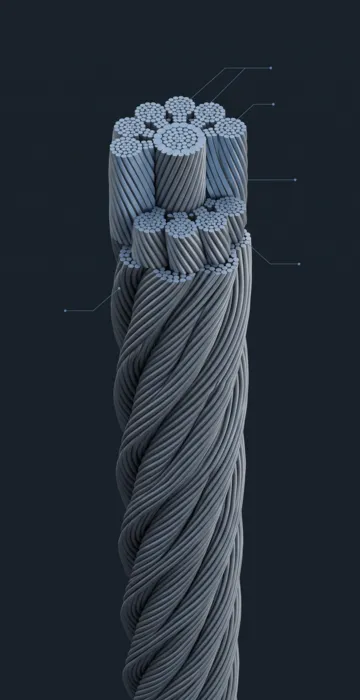
Drilling line is built from many steel wires twisted into strands, and those strands are laid around a core. That construction lets it bend over sheaves thousands of times. But every bend under load fatigues the wires a little, and eventually they start to break.
Why Cut Drilling Line?
You cut drilling line because wear piles up at the same few spots, and if you never move them, the line will fail there. Slipping moves those spots, and cutting gets rid of the oldest line.
Here's where the line takes the worst of it:
- The pickup points, where the line sits on the crown and traveling block sheaves when the string is lifted off the slips.
- The drum crossover points, where the line crosses from one groove to the next as it spools.
- The layer change points, where the line climbs from one wrap layer to the next on the drum.
New hands tend to assume a line wears out evenly along its whole length, but it doesn't. It wears out in a handful of places that get hammered every single trip. A good slip and cut program keeps those places moving so the wear spreads out.
What Is a Ton-Mile Calculation?
A ton-mile is a measure of the work the drilling line has done. One ton-mile is the work of moving one ton (2,000 pounds) a distance of one mile. Rigs add up ton-miles for every trip, every stand drilled and every casing run, and they slip and cut when the total hits the target in the rig's program.
The industry's standard method comes from API's recommended practice for oilfield wire rope, which you'll find among the API standards. For a round trip, the formula looks like this in plain words:
- Take the depth, times the depth plus the stand length, times the buoyed weight per foot of drill pipe.
- Add four times the depth, times the weight of the traveling equipment plus half the extra weight of the collars.
- Divide the total by 10,560,000 (that's 5,280 feet times 2,000 pounds).
Drilling ton-miles are figured from the round trip numbers before and after a stretch of drilling. Casing runs and other jobs have their own versions. Most rigs today let the rig computer or a spreadsheet do the math, but it's worth understanding where the number comes from.
Depth shows up twice because the deeper you go, the heavier the string and the longer the trip. Ton-miles climb fast on deep wells.
How Is a Slip and Cut Done?
The exact procedure belongs to your rig and the manufacturer, and it gets reviewed in a safety meeting before anyone touches the line. But the basic order looks like this:
- Get the string in a safe spot, usually with pipe set in the slips or out of the hole, and the hole stable.
- Hang off the traveling block, so its weight is held by a hang-off line or set down instead of the drilling line.
- Unclamp the dead line at the deadline anchor.
- Slip the planned length of new line from the supply reel through the system, spooling the slack onto the drum.
- Re-clamp the deadline anchor to spec.
- Unspool the drum, cut off the planned length of old line, and re-secure the line end to the drum.
- Re-spool, take the block off its hang-off, and check the crown protection settings and the weight indicator.
Some rigs slip several times between cuts, which still moves the wear spots and saves a bigger cut for later.
How Long a Cut?
The cut length isn't picked at random. It's chosen so that the worn spots don't land back on the same crossover points or sheaves. Every rig should have a chart or program that sets it, based on drum size and the rig's layout. Follow the chart, and don't freelance it.
What Does the Deadline Anchor Do?
The deadline anchor holds the dead end of the drilling line so it can't move. The line wraps around a drum on the anchor and is clamped, so the friction of the wraps takes most of the load off the clamp.
The anchor also usually holds the load sensor for the weight indicator. That means any time the line is unclamped and re-clamped, somebody needs to make sure the weight indicator reads true afterward. A bad reading after a slip and cut is not a small problem.
What Should You Look for When Inspecting Drilling Line?
Inspect the line regularly, not just at slip and cut time. Watch for:
- Broken wires, especially clusters of them in one spot.
- A drop in diameter, which can mean the core is failing.
- Kinks, crushing or flattening, often from bad spooling.
- Birdcaging, where the strands spread apart.
- Rust and dry spots where the lubricant is gone.
- Heat damage or arc burns.
Look at the sheaves too. A worn or tight groove will wreck new line in a hurry. If something looks bad, tell the driller. Damaged line can mean an unscheduled cut, and that's always cheaper than a dropped string.
Does a Top Drive Change the Slip and Cut?
Yes and no. The physics is the same, but the traveling equipment on a top drive system is heavier than an old hook and swivel, and that weight goes into the ton-mile math. The block also has to be hung off with the top drive in mind, following its own procedure.
The top drive made a lot of things easier on the floor. The slip and cut isn't one of them. It's still a careful, hands-on job.
Drilling Line Slip and Cut: Cheap Insurance Over Your Head
A drilling line slip and cut feeds new line through the blocks and cuts off the worn line at the drum. It keeps wear from piling up at the pickup points and crossovers. Rigs track ton-miles to know when it's due, and they follow a chart for how much to slip and cut.
If you're new, ask to help on the next one. Learn the procedure, learn what bad line looks like and learn why the anchor and weight indicator get checked after. That line is holding everything over your head, so treat it like it matters. It does.