Drilling Rig Layout – Where Everything Sits on Location
Walk onto a drilling location for the first time and it looks like somebody dropped a junkyard around a tower. Tanks, trailers, pipe, hoses, generators, trucks. But none of it landed there by accident. Every piece has a spot, and every spot has a reason. So what does a drilling rig layout look like, and why does everything sit where it does?
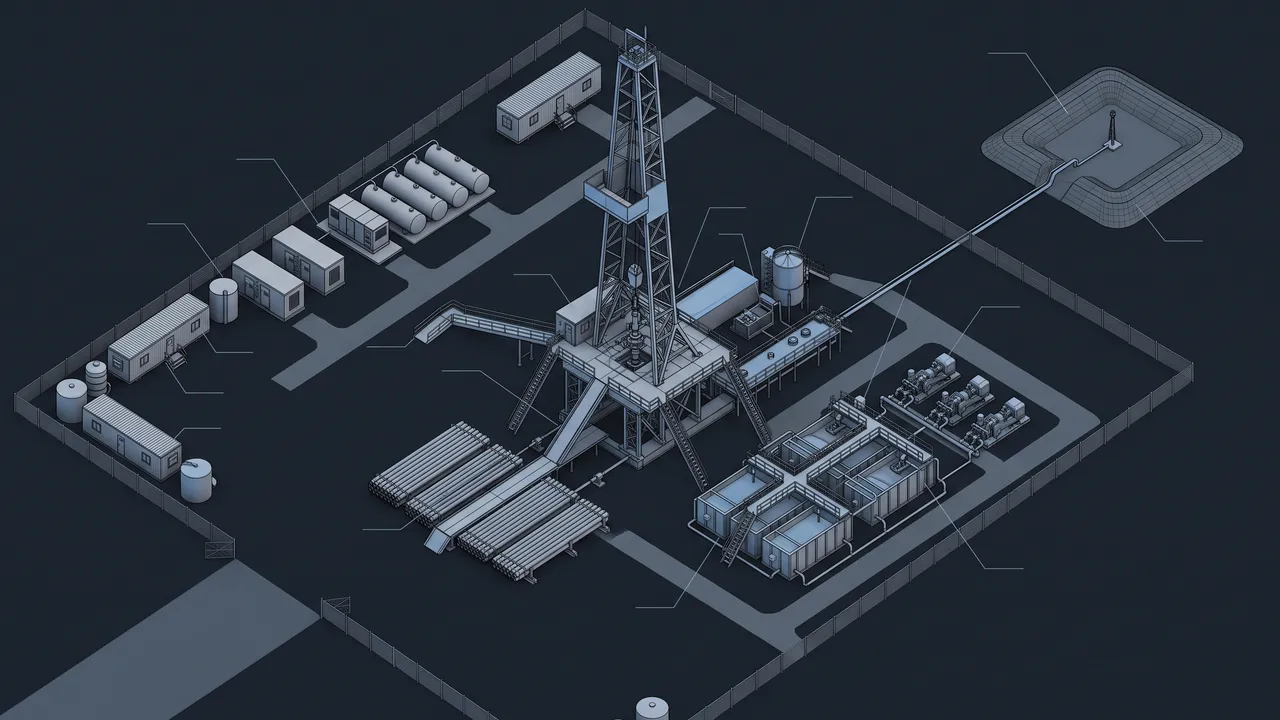
A drilling rig layout puts the rig and its substructure over the well in the middle of the pad, with the pipe racks and catwalk on one side, the mud tanks, pumps and solids control on another, and power, fuel and storage set back from the wellhead. The choke manifold sits near the rig, while the flare line runs out to a flare pit or stack well away from everything. Trailers go farthest out, usually upwind. The logic is simple: keep the work flowing in a loop, keep ignition sources away from the wellhead, and keep people out of harm's way if the well kicks.
What Does a Typical Drilling Rig Layout Look Like?
Picture the well as the center of a clock. The rig stands over it. Everything else spreads out in zones around that center. Here's a simple plan view of a common land rig site layout:
| Zone | What sits there | Why it's there |
|---|---|---|
| Center | Cellar, wellhead, BOP stack, substructure, rig floor, mast | Everything is built around the hole |
| Front (V-door side) | Catwalk, pipe racks, pipe staging | Pipe travels straight up the catwalk to the floor |
| One side | Mud tanks, shale shakers, solids control, mud pumps, mixing area | Short runs for mud lines from the pumps to the floor and back |
| Back or far side | Generators, fuel tanks, water tanks, BOP closing unit | Power and fuel kept away from the wellhead |
| Near the rig | Choke manifold, mud-gas separator | Must be close to the BOP and the floor |
| Well away | Flare pit or flare stack | Burns gas far from people and equipment |
| Outer edge | Trailers, offices, parking, muster points | Keep people clear of the work and upwind of the well |
No two pads are identical, and the rig contractor's own layout drawing is the one that counts. But if you learn this pattern, you can walk onto most locations and find your way around in about five minutes.
Why Is the Rig in the Middle of the Location?
Because the well is. The cellar is dug and the conductor is set before the rig ever shows up, and the rig sets right over that hole. Every other piece of equipment is placed relative to the wellhead.
The substructure lifts the rig floor high enough to fit the blowout preventer stack and wellhead underneath. That's why the floor on a deep-hole rig sits so high off the ground. On a multi-well pad, the rig sits over the first slot, and the layout leaves room for it to walk or skid down the row of wells.
Where Do the Pipe Racks and Catwalk Go?
The catwalk runs straight out from the V-door, the opening on the rig floor where pipe comes up. Pipe racks line up beside the catwalk so joints can be rolled onto it and pulled up to the floor.
That side of the location needs room, and lots of it. Drill pipe, collars, casing and tubing all come in long joints, and the trucks that deliver them need space to unload. I've always said you can judge a crew by how their pipe racks look. Neat racks, tallied and chocked, mean a crew that pays attention.
Where Are the Mud Pumps and Mud Tanks Placed?
The mud system usually sits along one side of the rig. Mud comes back up the hole, flows across the shale shakers, drops into the tanks, gets cleaned and conditioned, and goes back to the pumps. The pumps push it up the standpipe to the floor and down the drill string again.
That loop is why the tanks and pumps stay close to the rig. Short lines mean less pressure loss and fewer places for leaks. The mixing area, with its sacks or bulk storage for barite and other materials, sits near the tanks so the hands mixing mud aren't hauling sacks across the pad.
The cuttings come off the shakers here too, so this side also holds the cuttings bins, the reserve pit, or the closed-loop solids handling setup, depending on what the operator and the regulations call for.
Why Are Generators and Fuel Kept Away From the Wellhead?
Gas is the reason. If the well kicks or gas breaks out at the surface, you don't want it drifting into an engine air intake or a hot exhaust. Generators, engines and fuel tanks are set back from the wellhead and the shakers, where gas is most likely to show up first.
The BOP closing unit, also called the accumulator, follows the same thinking. It holds the hydraulic pressure that shuts the preventers, and it has to work when everything else is going wrong. So it's placed a safe distance from the wellhead, with a remote control panel on the rig floor. Standards and regulations set minimum distances for equipment like this, and the rig plan follows them.
Where Does the Flare Line Go?
The choke manifold sits close to the rig, tied into the BOP stack. When the crew circulates out a kick, returns go through the chokes and into the mud-gas separator. Gas that comes out of the separator gets piped down the flare line to a flare pit or stack.
That flare goes well away from the rig, the tanks and the trailers. It's usually placed with the prevailing wind in mind, so smoke and heat blow away from people. The line runs straight and well anchored, because a flare line whipping under pressure is a dangerous thing.
How Do Wind Direction and Safety Shape the Well Site Plan?
Wind decides a lot on location. Trailers, offices and muster points usually go upwind of the well based on the prevailing wind. Wind socks go up in several spots so everybody can see which way it's blowing at a glance.
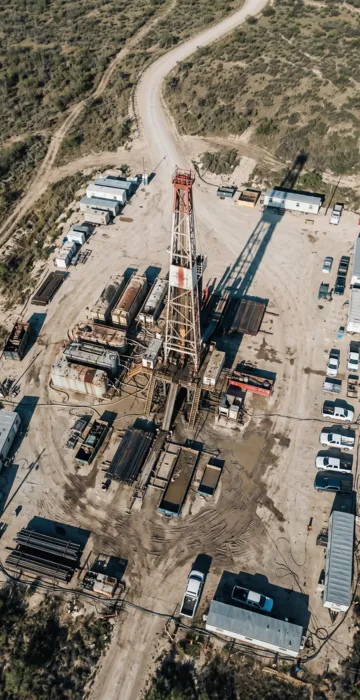
On wells where hydrogen sulfide is possible, this gets even stricter. You'll see at least two briefing or muster areas, so people can always reach one that's upwind no matter what the wind does that day. Your H2S training will cover it, and the site plan will mark them.
Other safety points that shape a well site plan:
- A clear access road and a second way out if the pad allows it.
- Room for emergency vehicles to get close to the rig.
- Fire extinguishers and eyewash stations at marked points.
- Walkways kept clear of hoses and cables.
If you want to put names to the equipment you'll see, OSHA has an illustrated glossary of rig components that's worth a look on your first hitch.
How Does a Drilling Pad Layout Change for Multi-Well Pads?
A multi-well drilling pad layout puts the wellheads in a row or a grid, often just a few yards apart. The rig walks or skids along that row, so the layout has to leave room for it to travel without moving the tanks and pumps every time.
Some systems keep the mud tanks and power stationary and use long flexible lines that follow the rig. Others move parts of the backyard along with it. Either way, the pad is bigger, and the planning is more careful, because one layout has to work for every well in the row.
Layout planning also ties into money. Pad size, the rig you choose and how fast it moves between wells all show up in the total drilling rig cost of a project.
So, What Does a Drilling Rig Layout Look Like? Every Spot Has a Reason
A drilling rig layout puts the rig over the well, pipe on the catwalk side, the mud system alongside, power and fuel set back, the flare well away, and people upwind on the edge. It looks crowded, but it's laid out to keep the work moving and keep gas away from anything that can light it.
When you show up on a new location, take a walk before your first tour. Find the muster points, the wind socks, the accumulator and the escape routes. Know your layout, and you'll know where to go when it counts.