Rig Up and Rig Down – How a Rig Move Gets Planned
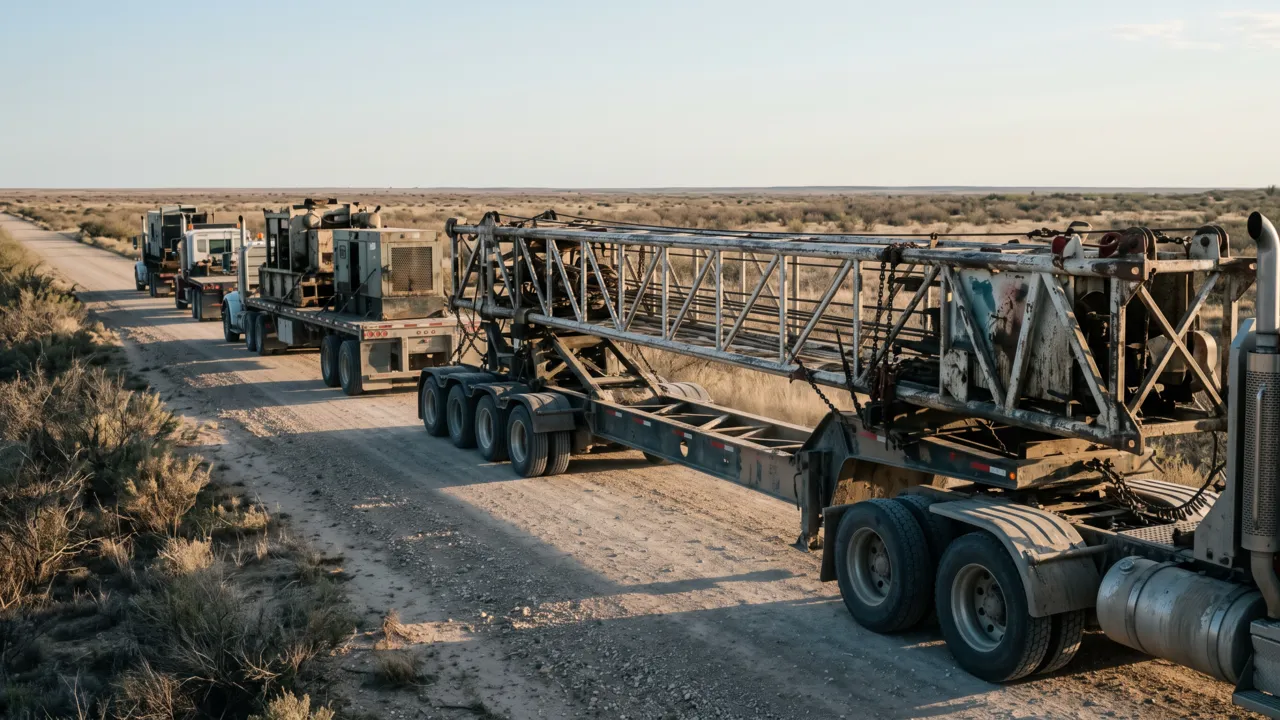
Every well starts and ends the same way. Before anybody makes hole, a whole rig has to be stood up on a bare pad, and when the well is done, it all has to come back down and go somewhere else. New hands hear "we're rigging down Thursday" and figure it's just packing up. It's not. So what do rig up and rig down really mean, and how does a rig move get planned?
Rig up means assembling and connecting all the rig's equipment on a new location so it's ready to drill; rig down means safely disconnecting and disassembling that equipment so it can be moved. Together with the trucking in between, the job is called a rig move, or mobilization. A good move is planned well before the last well finishes, with a load list, a site plan for the new location, trucking and crane schedules, and a safety plan for the high-risk lifts like raising and lowering the mast. Done right, it's organized and almost boring. Done wrong, it's where people get hurt.
What Does Rig Down Mean?
Rig down means taking the rig apart for a move. Lines get bled off and disconnected, the mast or derrick gets lowered, and the substructure, tanks, pumps, generators and everything else gets broken into loads.
It also means making the well safe before you walk away. The last well gets its casing, its wellhead and whatever temporary cap or valve the operator calls for. You don't start pulling the rig off a hole until the well is secured and the company man signs off.
On older rigs you'll hear "tearing down" or "tear out." Same idea.
What Does Rig Up Mean?
Rig up is the reverse. Loads arrive on the new location, and the crew sets mats, sets the substructure, raises the mast, then hooks up power, air, water, mud lines and every hose and cable it takes to make the rig run.
Rig up isn't finished when the mast is standing. It's finished when the rig passes its checks: the blowout preventer is installed and tested on the first casing string, alarms work, and the equipment has been run and inspected. Only then do you spud or drill out.
How Does the Rig Mobilization Process Work?
The rig mobilization process is the whole sequence from the end of one well to the start of the next. Here's how it usually goes on a conventional land move:
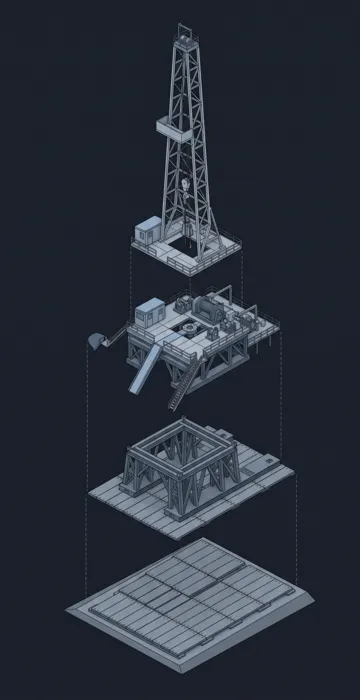
- Plan ahead. The toolpusher, operator and trucking company agree on a date, a route, a load list and a site layout for the new pad.
- Prep the new location. The pad is built, leveled and inspected. The cellar is dug and the conductor is often set before the rig arrives.
- Pre-rig down. While the last well is wrapping up, the crew lays down extra pipe, cleans tanks and stages anything that isn't needed for the final operations.
- Rig down. Lower the mast, break down the substructure, disconnect and load out.
- Move. Trucks haul loads in a set order, with permits and escorts for the big ones.
- Rig up. Set equipment in the planned spots, raise the mast, hook everything up.
- Inspect and test. Walk-arounds, function tests, BOP tests, and the pre-spud meeting.
That order matters. Loads should arrive in the sequence they get set. If the mud tanks show up before the substructure, they just sit on a truck in the way.
Why Does Rig Move Planning Start So Early?
A rig sitting on trucks isn't drilling, and on most contracts the move rate is lower than the operating day rate. Everybody wants the move short. The only way to make it short is to plan it before you need it.
Good planning covers things you'd never guess from the highway:
- Road permits for oversize and overweight loads, and routes that avoid weak bridges or tight turns.
- Crane size and placement for heavy lifts.
- Where each load sets on the new pad, so trucks aren't backing over each other.
- Weather. Wind limits for laying over or raising a mast are real limits, not suggestions.
- Pad condition. Soft ground after rain can stop a move cold.
The new pad layout is a big piece of this. Where the pumps, tanks, generators, pipe racks and trailers go is decided ahead of time, and the crew rigs up to that plan. If you want to see how those pieces fit together, have a look at a typical drilling rig layout.
What Goes on a Rig Move Checklist?
Every contractor has its own rig move checklist, and you follow yours. But most of them hit the same big items. I'd want to see these covered before the first truck rolls:
- Well secured and released by the operator.
- Job safety analysis done for mast lowering and raising, with roles assigned.
- Mast, raising lines and pins inspected before the lift.
- All pressure bled off, all energy sources locked out and tagged out.
- Fluids drained or contained, so nothing spills on the road or the pad.
- Load list with weights, dimensions and order of arrival.
- Rig-up layout for the new pad, marked out before loads arrive.
- Communication plan between crew, crane operator and truck drivers.
Notice how much of that is about energy and gravity. Stored pressure, hanging loads and a mast on the move are what hurt people on rig moves.
Is Rigging Up and Down Dangerous?
It's one of the riskier times on any rig, and I won't sugarcoat that. A rig move puts a lot of trucks, cranes and people on a small patch of ground at once, and much of the work is unfamiliar compared to normal drilling days.
OSHA's guide to rigging up hazards lists the usual suspects: struck-by from moving equipment and loads, caught-between at pinch points, falls when working on the mast or substructure, and vehicle hazards on location. Anybody who has stood near a mast going up knows the feeling. Every eye on location should be on that lift.
Here's my advice to any new hand on a move:
- Never stand under a suspended load or inside the fall zone of the mast.
- Keep your hands out of pinch points when pinning sections. Use a tool, not your fingers.
- Make eye contact with drivers and crane operators before you walk behind or near them.
- If you aren't sure what's next, ask. Rig moves punish guessing.
How Long Does Rig Up and Rig Down Take?
It depends on the rig, the distance and the crew. A small, simple rig moving a short distance can be rigged down, moved and rigged up in a few days. A big rig moving a long way can take a week or more, especially if weather or permits hold up the trucks.
On a multi-well pad with a walking or skidding rig, moving to the next slot can take hours instead of days, because the rig never fully comes apart. That's a big reason pad drilling took off.
The fastest crews aren't the ones who rush. They're the ones who rigged down neatly, labeled everything and loaded in the right order. Smooth beats fast every time.
Rig Up and Rig Down: Where Every Well Begins and Ends
Rig up means putting the rig together and getting it ready to drill. Rig down means taking it apart safely so it can move. In between sits the rig mobilization process: planning, trucking, laying out the new location and testing before the first foot of hole.
If you're new, learn the move. Learn the order, learn the pinch points, learn where the mast falls if something lets go. Crews that move well drill well, and they go home in one piece.