Kelly, Swivel and Rotary Table – How Rigs Turned Pipe Before Top Drives
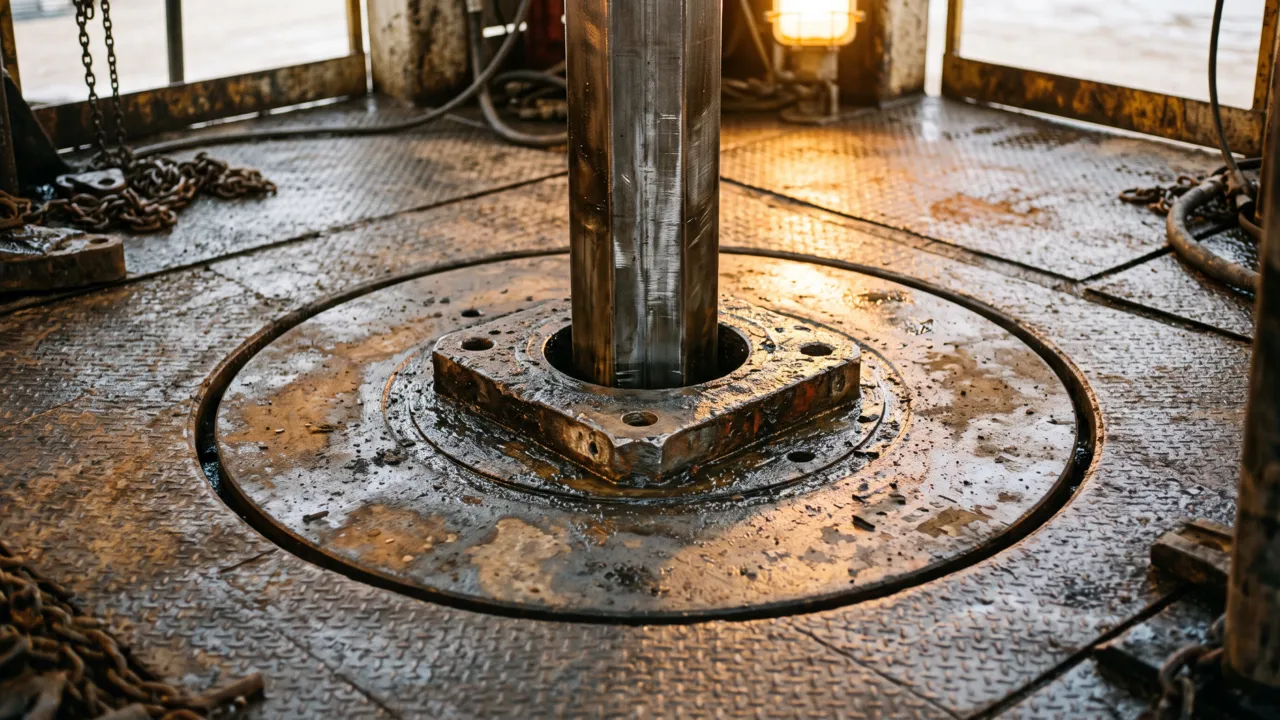
Before top drives took over, every rig floor had a square or six-sided pipe sticking up out of the rotary table, spinning away while the crew watched the weight indicator. That was the kelly, and for most of the last century it was how wells got drilled. Plenty of rigs still run one. If you've only ever seen a top drive, the old setup can look like a puzzle. What does a kelly do, and how did the kelly drive turn the pipe?
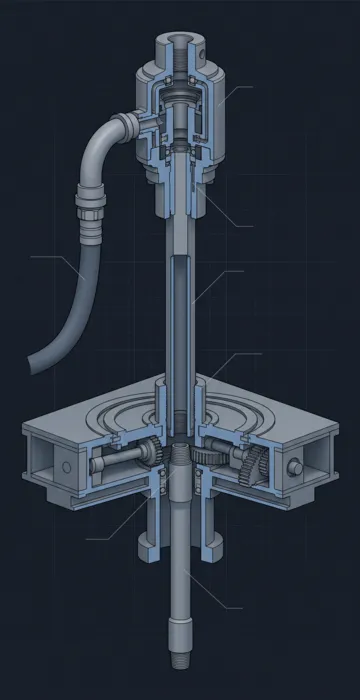
A kelly drive turns the drill string from the rig floor using three parts working together: the rotary table, the kelly bushing and the kelly. The rotary table spins, and a kelly bushing locked into it grips the flat sides of the kelly, so the kelly turns with the table. The kelly is screwed into the top of the drill pipe, so the whole string turns down to the bit. Above the kelly, the swivel holds the weight of the string from the hook while letting it rotate, and passes mud into it. The kelly slides down through the bushing as the bit drills ahead.
What Does a Kelly Do?
The kelly transmits rotation from the rotary table to the drill string. It's a heavy steel pipe with flat sides, usually square or hexagonal, so something can grip it and turn it while it still slides up and down.
It's hollow, too. Mud from the swivel flows down through the kelly and into the drill pipe below. So the kelly carries torque, carries mud and carries a big share of the hoisting load when the string is hanging off it. You can read the short textbook definition of the kelly in the SLB Energy Glossary.
Why flat sides instead of round? Because a round pipe would just spin inside the bushing. The flats are what let the bushing grab hold. Hex kellys became popular because they're stronger for the same size and spread the load over more faces.
A kelly is commonly around 40 feet long (some are 54), which is a little longer than a joint of drill pipe. That length matters, because the kelly can only drill down as far as its own length before you have to stop and make a connection.
What Is a Kelly Bushing?
The kelly bushing is the piece that couples the kelly to the rotary table. It sits in the master bushing in the rotary table, locked in with pins or a square drive, and it has rollers that ride on the flat faces of the kelly.
When the table turns, the kelly bushing turns, and the rollers push on the kelly's flats to turn it. At the same time, the rollers let the kelly slide straight down as the bit makes hole. It's a clever piece of iron. Rotation goes through it, and vertical travel goes right past it.
Kelly bushing rollers wear, and worn rollers chew up the kelly faces. Crews check them and grease them on a schedule. A sloppy fit also makes the kelly whip, which is hard on everything.
The kelly bushing gives us another old term, too. Depths on many well logs and reports are measured from the "KB," the kelly bushing elevation, because that was the fixed reference point on the rig floor. You'll still see that reference used even on top drive rigs.
How Does Rotary Table Drilling Work?
In rotary table drilling, the rotary table is the turntable in the rig floor that provides the rotation for the whole drill string. It's driven by a chain or shaft from the rig's power system on older rigs, or by its own electric motor on newer ones.
The table has a hole through the middle big enough for the bit and pipe to pass. The master bushing fits inside that opening. When you're drilling, the kelly bushing drops into the master bushing and the table turns everything. When you're tripping, the kelly bushing comes out, and the slips set into the master bushing to hold the pipe.
So the rotary table does two jobs. It turns the pipe while drilling, and it holds the pipe in the slips while making connections and tripping. Even on top drive rigs, a rotary table (or something like it) usually stays in the floor for the slips, though it rarely does the turning anymore.
The SLB glossary has a short entry on the rotary table if you want the formal wording.
What Does a Drilling Swivel Do?
A drilling swivel hangs from the hook under the traveling block and holds up the kelly and drill string while letting them rotate. It also brings drilling mud from the rotary hose into the spinning kelly.
The swivel has a bail on top that hangs in the hook, a heavy thrust bearing that carries the hanging weight, and a rotating stem on the bottom that's screwed to the kelly. The gooseneck on the side connects to the rotary hose, and a washpipe and packing seal the joint between the stationary body and the rotating stem.
One detail on the swivel trips up a lot of new hands. The connection between the swivel and the kelly uses left-hand threads. That way, turning the string to the right while drilling tightens that connection instead of backing it off. Little details like that are why the old rigs worked as well as they did.
How Did a Crew Make a Connection With a Kelly?
Making a connection with a kelly was more handwork than with a top drive, and it happened every 30 feet or so. Here's the basic order:
- When the kelly was drilled all the way down, the driller stopped rotating, picked up so the top tool joint cleared the table, and shut the pumps down.
- The crew set the slips to hold the string.
- Using tongs, they broke the kelly loose from the drill pipe and spun it out.
- They swung the kelly over to the mousehole, where the next joint of pipe was waiting, and made it up.
- They picked up the kelly with the new joint attached, stabbed it into the string in the slips and made up the connection.
- They pulled the slips, started the pumps and went back to drilling.
When tripping out, the kelly was set back in the rathole, a cased hole beside the rotary table, so the crew could pull pipe with the elevators. That's why kelly rigs have a rathole and a mousehole.
Kelly connections were where a lot of floor injuries happened. Swinging tongs, spinning chains and heavy pipe in tight quarters don't mix well with tired hands. That's a big reason the industry was happy to move on.
What Are Kelly Cocks?
Kelly cocks are valves above and below the kelly that can shut off flow up the drill string. The upper kelly cock sits between the swivel and the kelly. The lower kelly cock sits below the kelly, between it and the drill pipe.
They're well control equipment. If the well kicks and fluid comes up the inside of the pipe, closing a kelly cock keeps it from blowing out through the swivel and hose. They need to be function tested on schedule, and the wrench to close them needs to live where everybody can find it.
Why Did Top Drives Replace the Kelly Drive?
Top drives drill with full stands instead of single joints, and they can rotate and circulate during trips. A kelly rig can't do either very well. Fewer connections mean less time and less risk, and the ability to backream helps keep pipe from getting stuck.
Still, kelly rigs are simpler and cheaper, and they work fine for shallow wells and plenty of workover jobs. A good kelly rig crew can drill a lot of hole. The kelly, swivel and rotary table are also still a big part of the language on the floor, so they're worth knowing even if your rig has never run one. They sit right alongside the rest of the rig floor equipment you'll learn your first few hitches.
So, What Does a Kelly Do? It Turns the World From the Floor
A kelly drive turns the drill string from the rig floor. The rotary table spins, the kelly bushing grabs the flat sides of the kelly, and the kelly turns the pipe all the way to the bit while sliding down as the hole gets deeper. The swivel holds the weight up top and feeds mud in.
Top drives have taken over most rigs, but the kelly did the job for generations. If you end up on a kelly rig, respect the tongs, know where the kelly cock wrench is and take your time on connections. That's how the old hands went home in one piece.